Quick Answer: Mill Valley is a town of roughly 14,000 residents and about 6,500 homes at the eastern base of Mount Tamalpais in southern Marin County, CA (ZIP 94941), incorporated in 1900. It prices in the top tier of Marin real estate, and its market is defined by terrain: level "flats" near downtown and Richardson Bay command a convenience premium, while hillside and canyon homes trade access for redwoods, privacy, and views. The 94941 ZIP is larger than the city itself — Tam Valley, Almonte, Homestead Valley, and Strawberry are unincorporated county areas with Mill Valley addresses. There are no Mello-Roos taxes anywhere in town, but wildfire-zone insurance and voter-approved parcel taxes are core due-diligence items.
Key Takeaways
Mill Valley the city and Mill Valley the mailing address are two different maps, and the difference matters in a transaction. The incorporated city — downtown, the canyons, the hillside neighborhoods, and the flats along Miller Avenue and East Blithedale Avenue — is governed by City of Mill Valley planning and served by the Mill Valley Fire Department. Tam Valley, Almonte, Homestead Valley, and Strawberry are unincorporated Marin County communities inside the same 94941 ZIP: they use Mill Valley addresses, but permits run through county planning (with the Tamalpais Design Review Board in much of the area), and fire protection comes from the Southern Marin Fire Protection District.
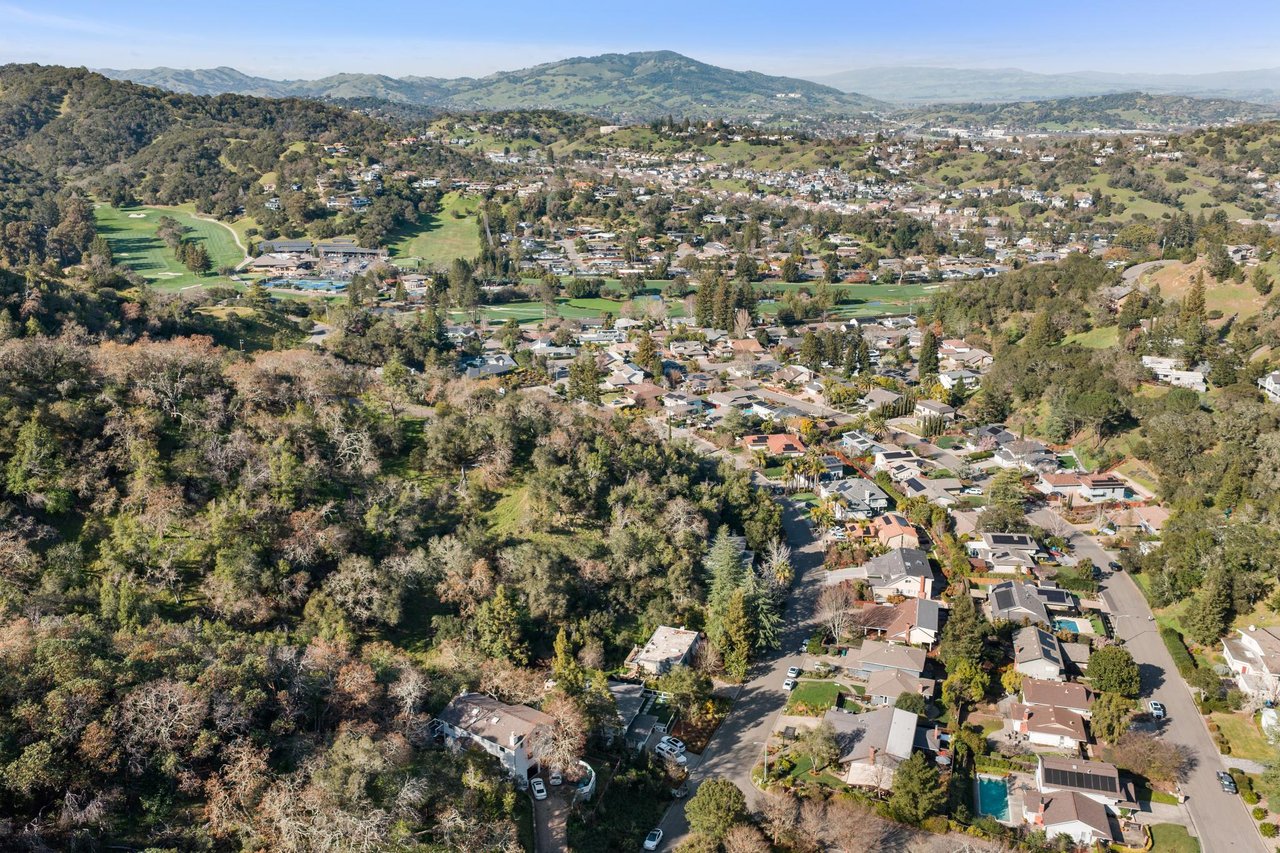
Geographically, the town occupies the ground between Mount Tamalpais on the west and Richardson Bay on the east. US-101 runs along the eastern edge at Tam Junction and the Manzanita interchange; East Blithedale Avenue and Miller Avenue are the two spines that carry you from the highway into downtown. Sausalito borders to the south over the ridge, Corte Madera to the north over Camino Alto and Horse Hill, and Strawberry and Tiburon sit east across Richardson Bay. Mount Tamalpais State Park and Muir Woods National Monument wrap the town's western and southwestern flanks, which is the single biggest reason Mill Valley cannot meaningfully expand — the greenbelt is permanent.
Buyers should confirm jurisdiction on day one for any 94941 property. City versus county determines which planning code, design review process, and fire agency govern the parcel, and it can change the renovation math on otherwise similar homes.
Mill Valley is a structurally supply-constrained market, and that constraint — not any single quarter's data — is what a buyer or seller most needs to understand. The town is effectively built out: state park and national monument land block westward growth, the bay blocks eastward growth, and steep terrain makes infill slow and expensive. Add long ownership tenures reinforced by Proposition 13 and you get chronically thin resale inventory in one of the Bay Area's most requested locations.
In my quarter-by-quarter BAREIS MLS analysis of Marin's sub-markets, Mill Valley consistently behaves as a two-speed market. Prepared, accurately priced homes — especially turnkey properties — draw competition in their first weeks and routinely close at or above asking. Homes that miss on price, presentation, or disclosure readiness sit, and once they sit, the eventual discount tends to be far larger than the original overreach. That bifurcation holds across rate cycles; only the split point moves. The renovation-cost problem sharpens it: because hillside construction here is slow and expensive, buyers pay a pronounced premium to avoid it, which is why finished homes and fixers can feel like two different markets on the same street.
This guide is deliberately evergreen, so I keep the perishable numbers where I can update them constantly instead of here: my Marin Market Intelligence briefings and my video library carry the current quarter's BAREIS MLS medians, days on market, and overbid rates for Mill Valley. You can also browse current listings in Mill Valley at any time.
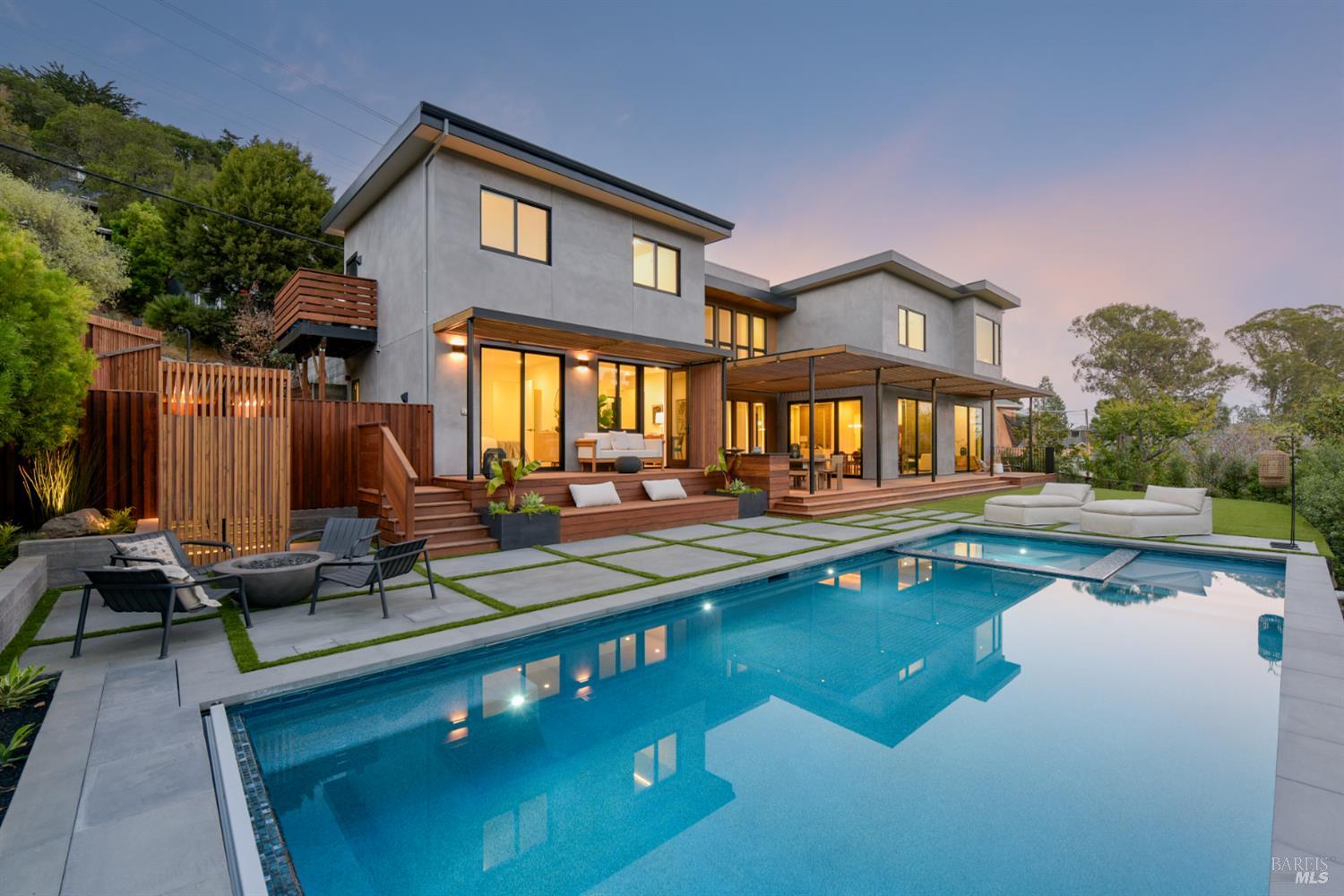
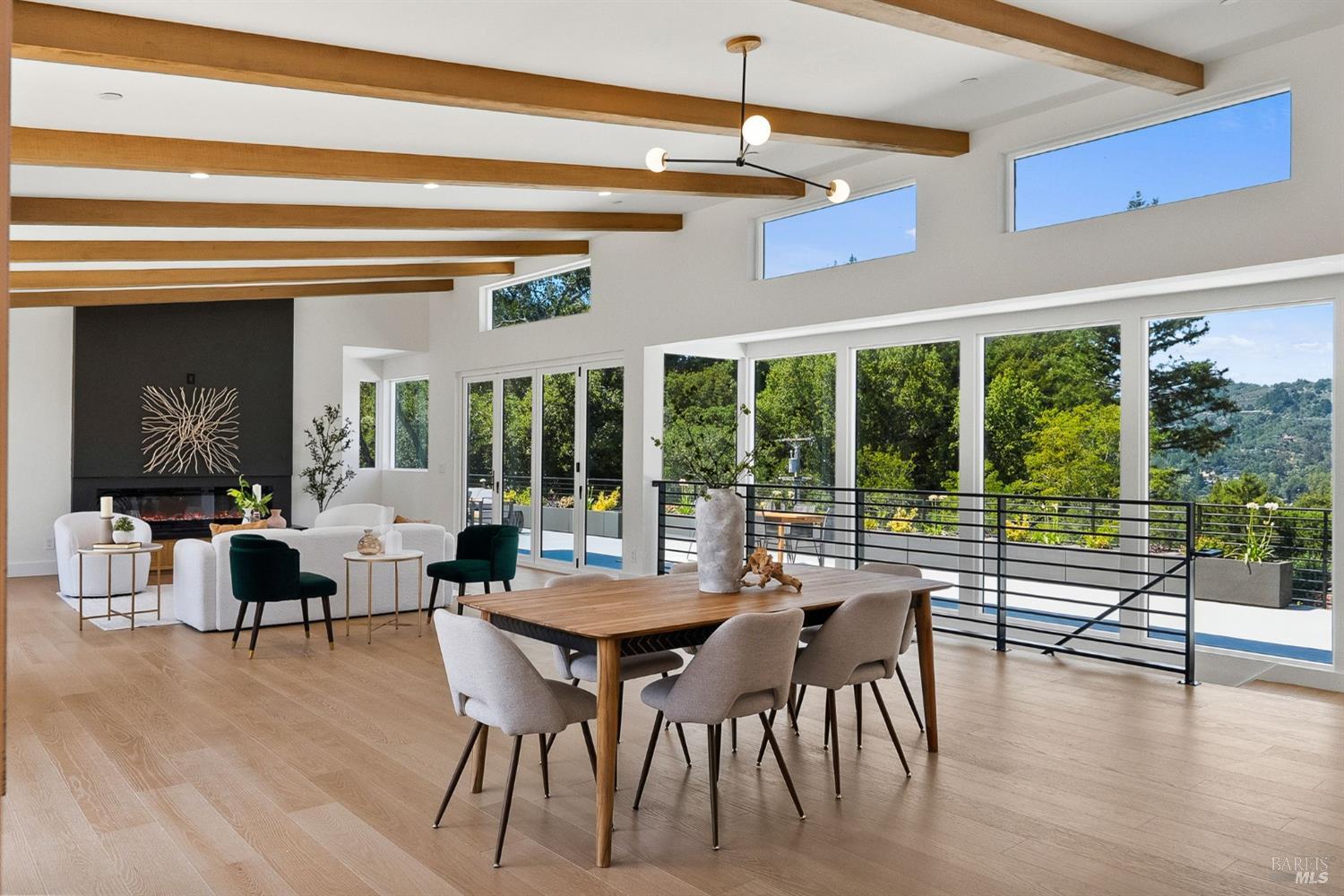
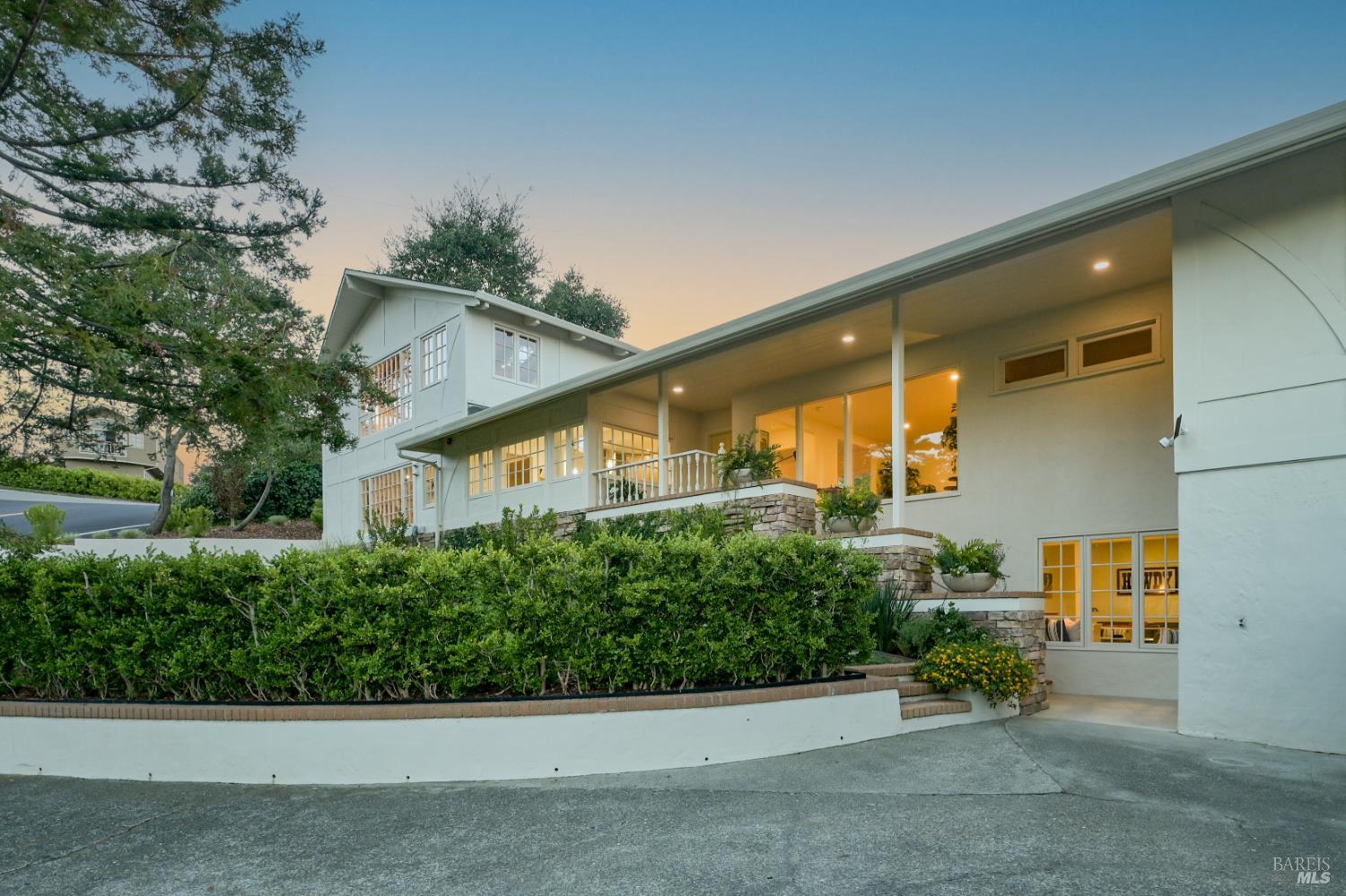
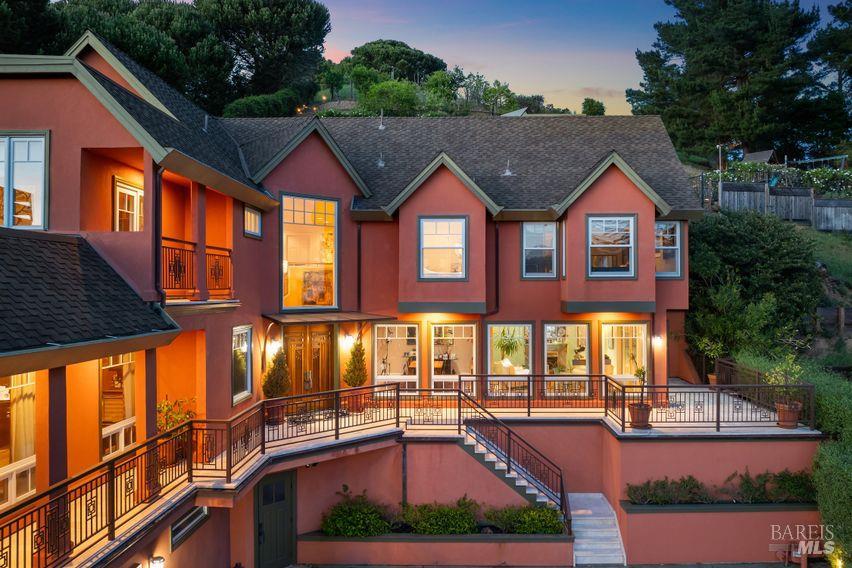
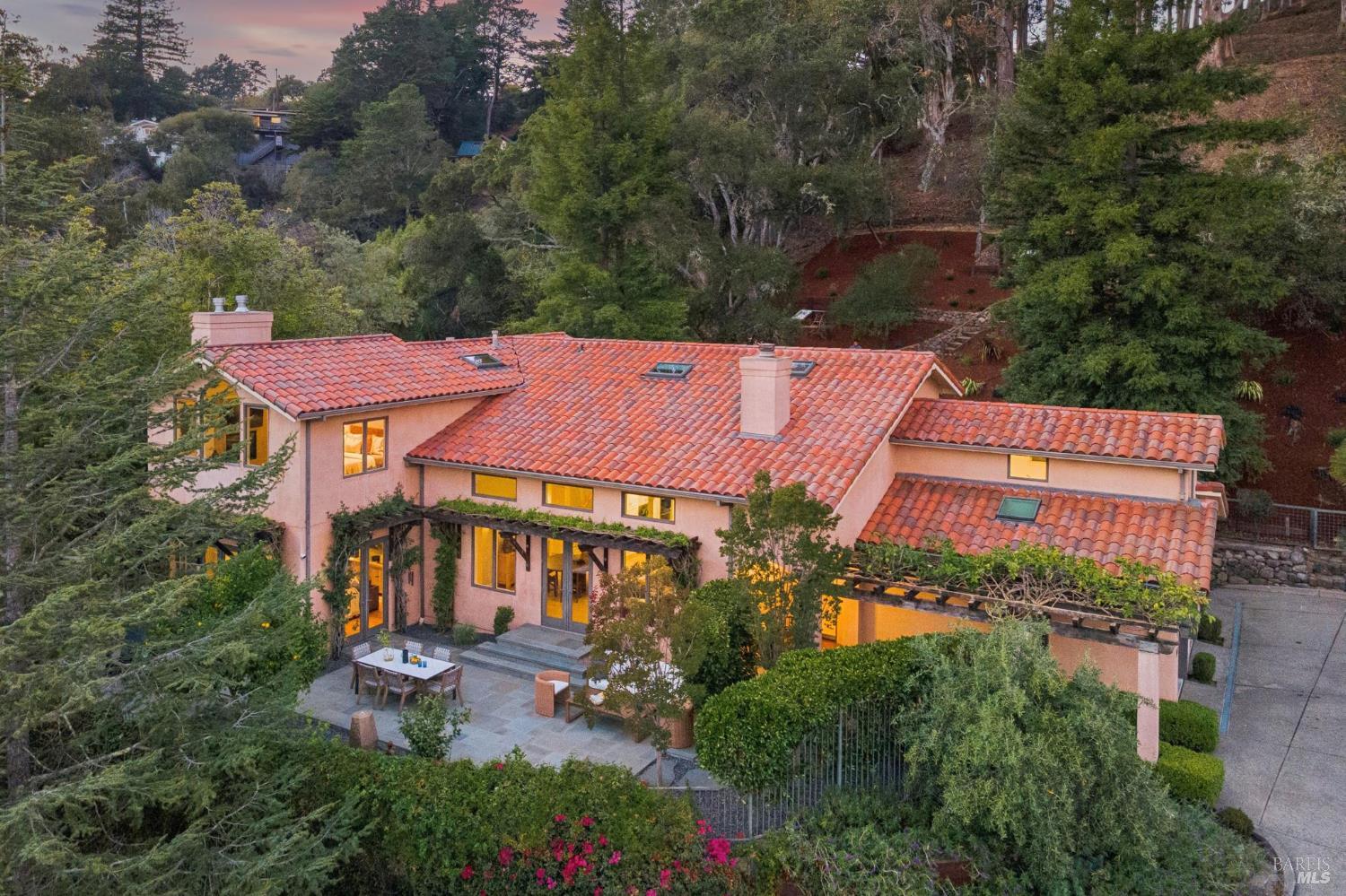
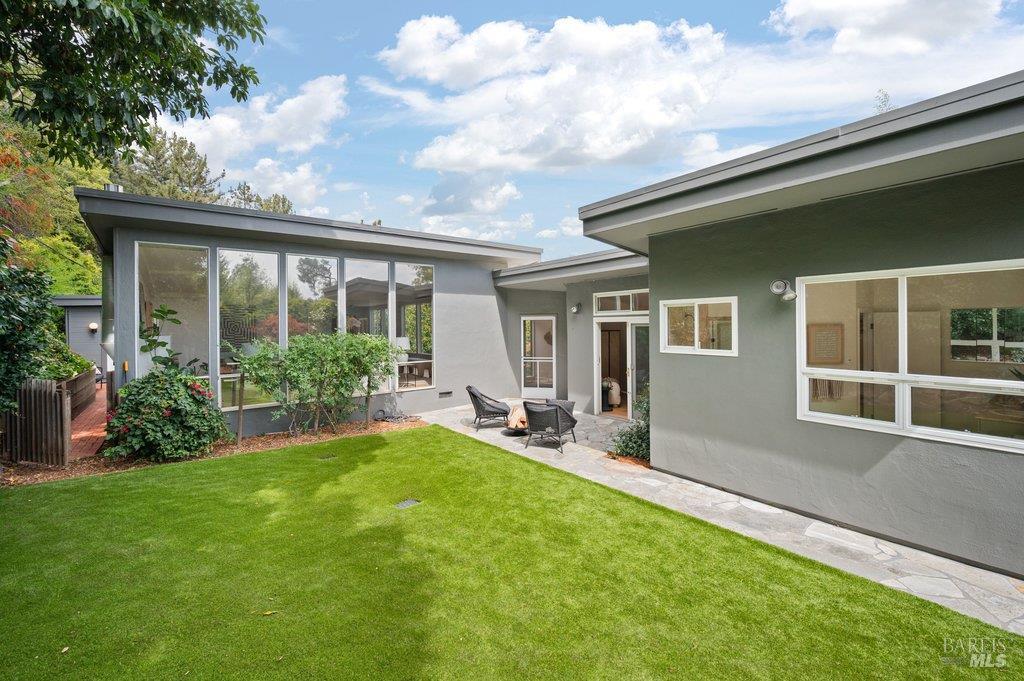
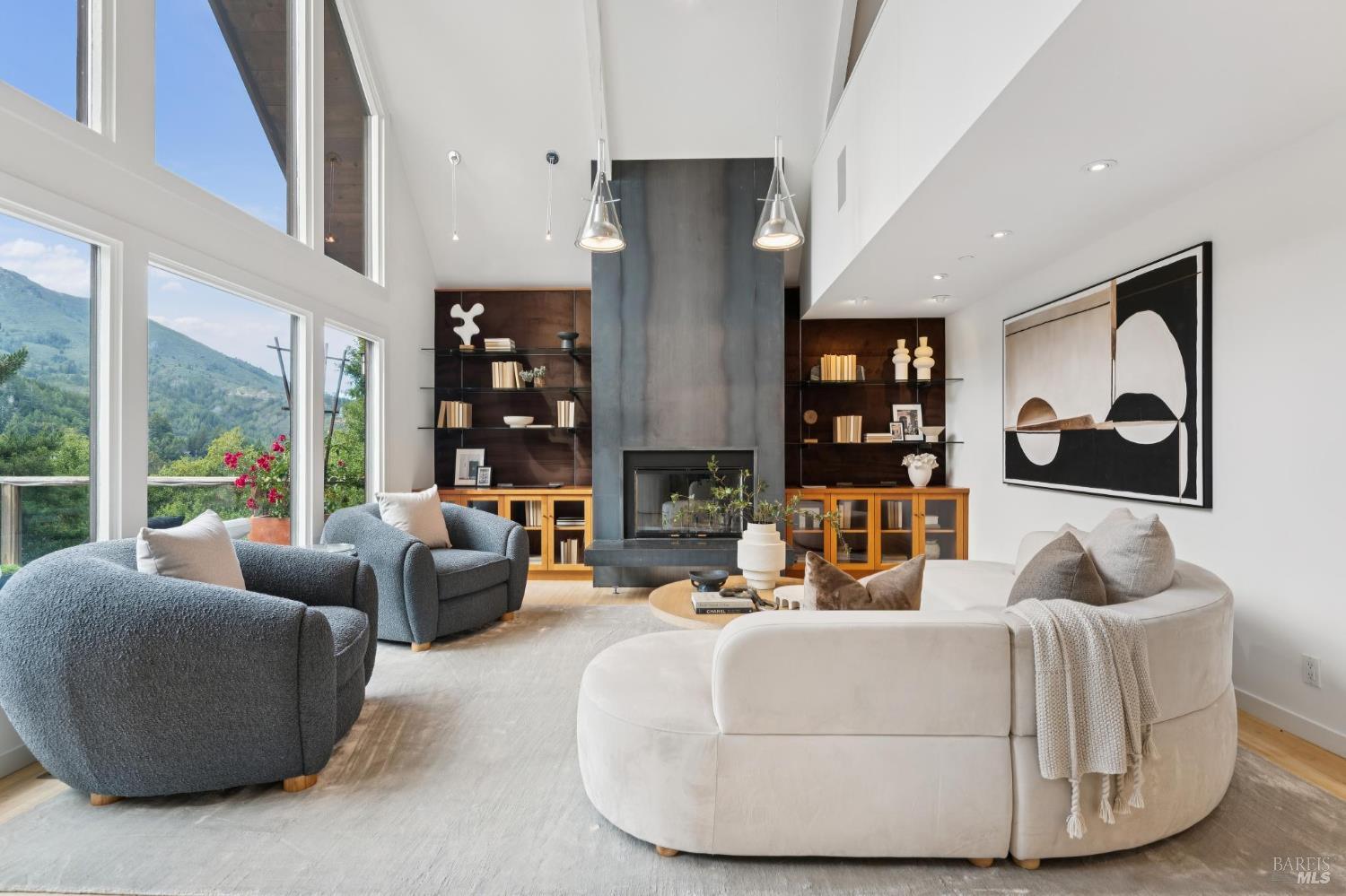
Mill Valley's housing stock reads like a timeline of the town itself. The oldest layer — Victorian and Craftsman cottages from the 1890s through the 1910s — clusters around downtown and Old Mill Park, dating to the era when the town was a logging terminus and summer retreat. The canyons hold converted early-1900s summer cabins alongside fully rebuilt retreats under old-growth redwoods. Mid-century construction added view homes engineered into the hillsides, ranch neighborhoods on the flats such as Sycamore Park, Enchanted Knolls, and Alto, and a recognized tract of Eichler homes in Strawberry. The newest layer is custom: modern rebuilds with walls of glass aimed at Mount Tamalpais or the bay.
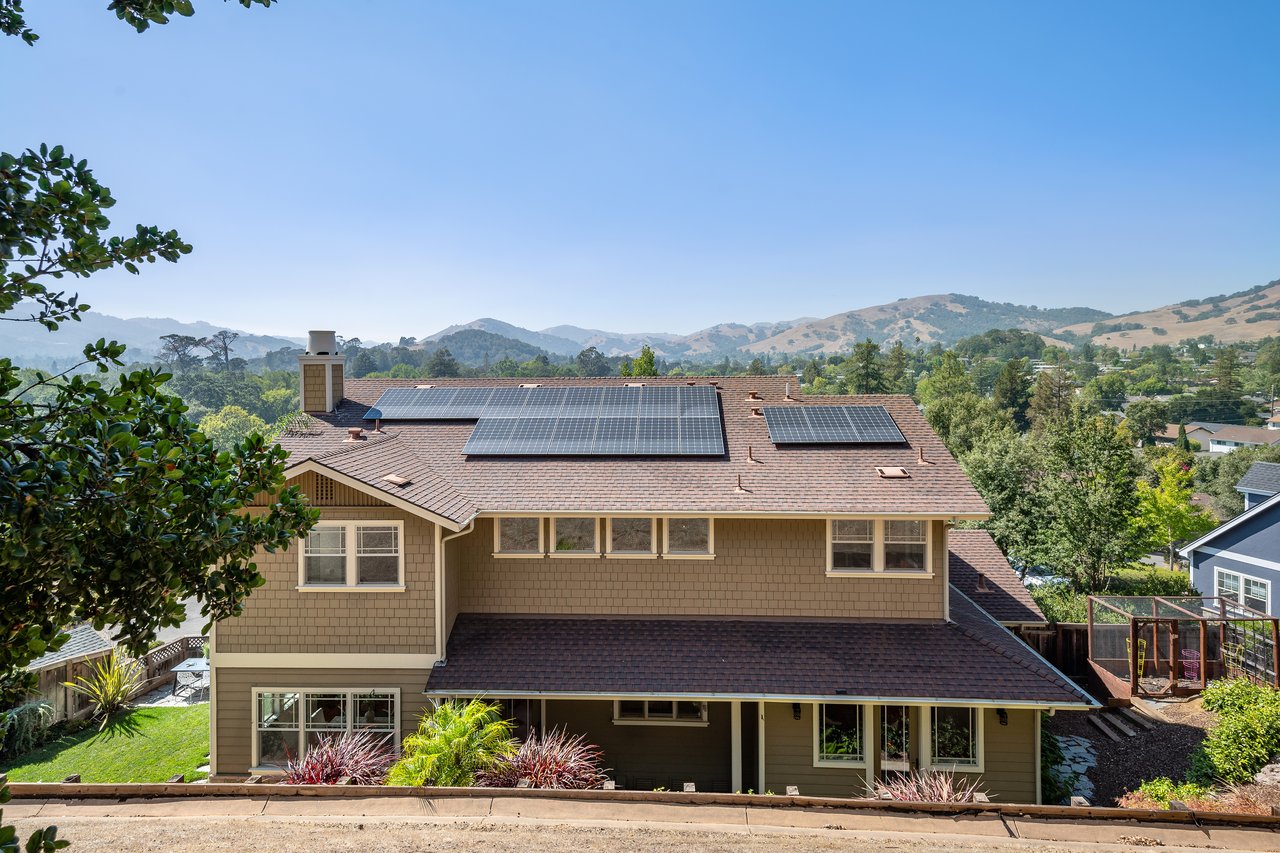
Terrain shapes everything about how these homes live. Hillside properties are oriented to views rather than street frontage, which can mean dozens of exterior stairs, limited or no garage, and driveways that require a strategy. Flat-lot homes near downtown, along the Miller Avenue corridor, and in Tam Valley and Almonte are generally more modest architecturally but deliver level entry, parking, and yards — and that convenience is capitalized directly into price.
Mill Valley is a collection of distinct micro-areas, and choosing among them is mostly a decision about terrain, light, and distance to the Depot Plaza. The short version of each:
Every Mill Valley purchase is ultimately a position on the flats-versus-hillside question, and I walk every buyer through it explicitly. The flats sell convenience: level entry, parking, sun, and stroller- and contractor-friendly logistics. The hillside and canyons sell setting: redwoods, privacy, and views that flat lots cannot manufacture at any price. Neither is objectively better, but they suit different lives, and the resale audiences differ — the flats draw the broadest buyer pool, while the hills draw a narrower pool willing to pay decisively for the right property.
Three practical variables decide most hillside purchases. First, light and the fog line: canyons and upper west-facing slopes hold summer fog and shade longer, while east-facing slopes and the flats toward Richardson Bay clear earlier and run warmer — visit at different times of day before you write. Second, access: count the stairs, test the parking, and picture a rainy February grocery run. Third, maintenance economics: retaining walls, drainage, foundations, and tree work cost more on grade, and renovation budgets on steep lots run well above county norms because of access and permitting. Buyers who price those variables honestly buy well here; buyers who shop the view alone often relist within a few years.
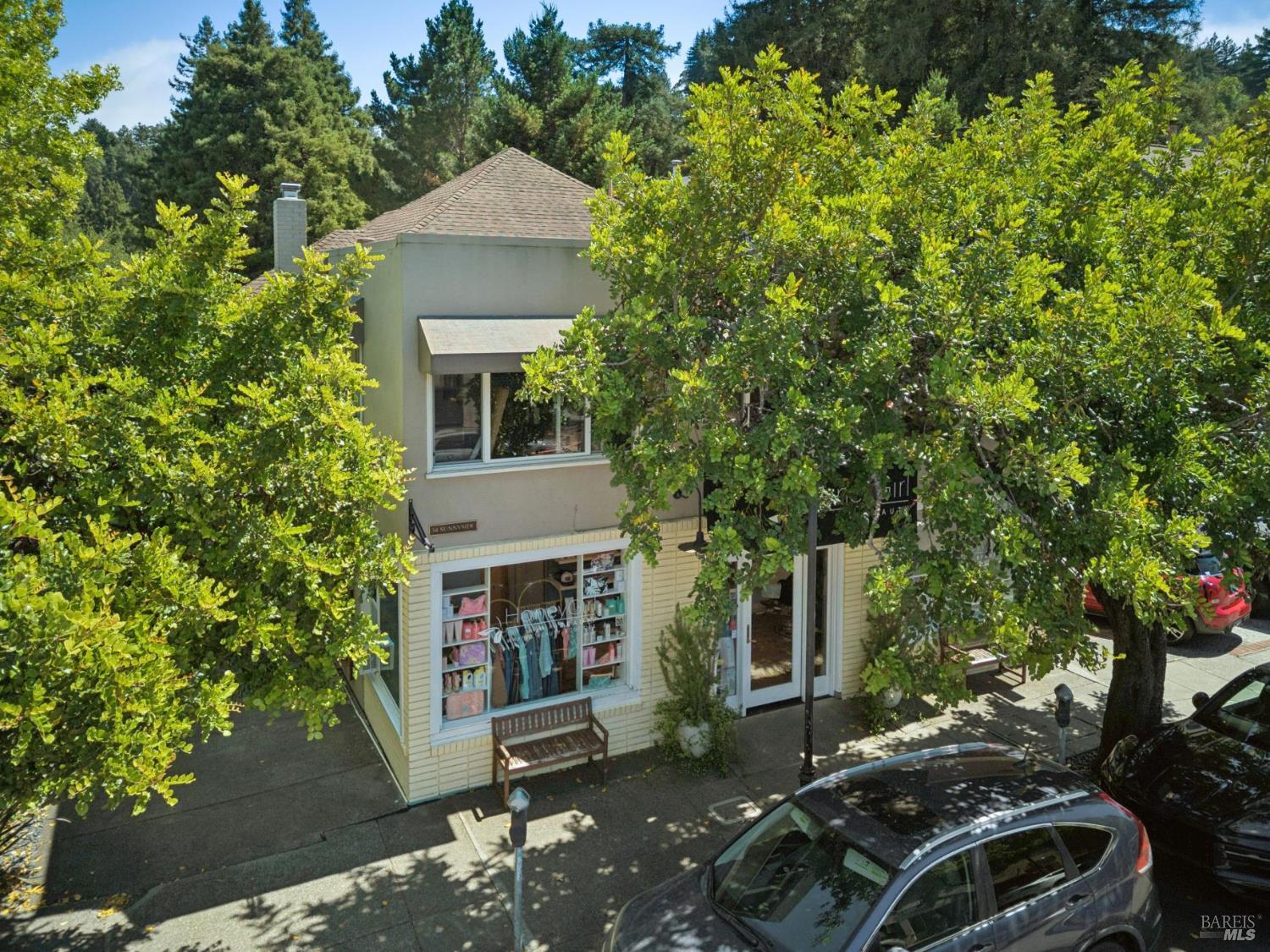
Daily life in Mill Valley orbits Depot Plaza, the downtown square where the town's logging railroad once terminated. The surrounding blocks hold the Throckmorton Theatre, the Mill Valley Public Library on the edge of Old Mill Park, Equator Coffees, Piazza D'Angelo, and Sweetwater Music Hall, the storied club dating to 1972 whose stage still draws nationally known acts. Each October the California Film Institute's Mill Valley Film Festival brings premieres and filmmakers to town. On Miller Avenue, the 2AM Club has poured drinks for over a century and appears on the cover of Huey Lewis and the News' "Sports" album — the kind of detail that tells you how long this town has been a musicians' town.
The outdoor inventory is the other half of the ledger. The Dipsea Trail begins its nearly 700 steps a few blocks from downtown en route to Stinson Beach; the Dipsea Race has run every June since 1905 and is the oldest trail race in America. Old Mill Park holds the reconstructed sawmill that named the town. Mount Tamalpais State Park, Muir Woods National Monument, and the Tennessee Valley trailhead are all within roughly ten minutes, the Mountain Play has staged productions in the stone Cushing Memorial Amphitheatre on Mount Tam since 1913, and the Mill Valley-Sausalito Multiuse Path gives runners and cyclists a flat bayside route. Everyday errands run through Whole Foods on Miller Avenue, the Strawberry Village center, and Good Earth Natural Foods at Tam Junction.
The Mill Valley School District serves grades K-8 with five elementary schools — Old Mill, Park, Edna Maguire, Strawberry Point, and Tam Valley — feeding Mill Valley Middle School. For grades 9-12, the town is part of the Tamalpais Union High School District, with most students attending Tamalpais High School near the Miller Avenue corridor. Private options in and near town include Marin Horizon School, Mount Tamalpais School, and Greenwood School.
For performance data, consult GreatSchools and the California School Dashboard directly — attendance boundaries vary by address, particularly across the city/unincorporated line, so verify the assigned schools for any specific home rather than assuming by neighborhood.
Plan on roughly 25 to 50 minutes to downtown San Francisco by car depending on the hour, via US-101 south across the Golden Gate Bridge. The honest version: the Tam Junction and Manzanita on-ramps meter the morning experience, and evening return traffic over the Waldo Grade is the variable to test. Golden Gate Transit commuter buses run from the Manzanita Park & Ride and in-town stops; the Sausalito ferry terminal is about ten minutes south; and the Larkspur ferry terminal — also the southern terminus of the SMART train — is a similar distance north. A meaningful number of commuters ride the Mill Valley-Sausalito path to the ferry by e-bike. My standing advice: test your actual route at your actual departure time before you commit to a home.
Mill Valley's cost of ownership is favorable on the line items new-construction buyers fear most, and demanding on the ones older housing stock creates. There are no Mello-Roos Community Facilities Districts anywhere in town — a genuine differentiator versus many newer California developments — and most single-family homes carry no HOA. Condominium and townhome communities such as Shelter Bay are the HOA exceptions, and hillside buyers should ask a different question: whether the home sits on a private or shared road with a maintenance agreement splitting costs for paving, retaining walls, or drainage among neighbors.
Beyond the roughly one percent base property tax on assessed value, Marin County tax bills in Mill Valley include voter-approved parcel taxes — school district measures, the Marin Wildfire Prevention Authority (Measure C) parcel tax that funds county-wide vegetation management and evacuation planning, and city municipal service levies. The amounts change with elections and inflation adjustments, so I pull the actual tax bill for any parcel a client is serious about rather than estimating.
The housing stock skews pre-1980, and the terrain works on structures year-round. Budget attention for foundations, drainage, retaining walls, and sewer laterals — the town sits in the Sewerage Agency of Southern Marin service area, and replacing a failed lateral running downhill through granite and tree roots is a five-figure conversation. Renovation costs on steep lots exceed county norms because of access and permitting, which is exactly why the market pays such a premium for finished homes.
Portions of Tam Junction, Almonte, and lower Miller Avenue sit in FEMA flood zones near Richardson Bay, and king tides periodically cover parts of the Manzanita Park & Ride. Financed purchases in mapped zones typically require flood insurance. Check the FEMA map for the specific parcel; two homes a block apart can carry different requirements. The path across Bothin Marsh already floods about 30 times a year, and both the county's Bothin Marsh adaptation project and Caltrans's US-101/State Route 1 sea-level rise project are still in planning, so underwrite today's conditions rather than a future fix. Ask the seller for an elevation certificate and get a flood insurance quote during the contingency period.
Much of Mill Valley — especially the canyons and hillsides against Mount Tamalpais — falls within High or Very High Fire Hazard Severity Zones on CAL FIRE's maps, and I treat insurability as a first-week escrow task rather than a closing formality. The designation affects insurance availability and pricing, triggers defensible-space obligations, and brings California's AB 38 requirement into every sale: documentation of a defensible-space inspection when a home in a high-hazard zone transfers. The Marin Wildfire Prevention Authority funds vegetation management, evacuation route work, chipper days, and free defensible-space evaluations across the county, and both the city fire department and Southern Marin Fire Protection District run active hardening programs.
Use CAL FIRE's Fire Hazard Severity Zone viewer to confirm the parcel's zone, then cross-check the City of Mill Valley or Marin County hazard maps depending on jurisdiction. Before removing contingencies, get a written insurance quote — not a verbal indication — and ask specifically about brush clearance conditions. I make this sequence standard on every Mill Valley purchase I represent.
These three central-to-southern Marin towns are the most common short list I see from relocating buyers, and the differences are structural rather than cosmetic. I maintain full guides to Larkspur and Corte Madera as well.
Mill Valley | Larkspur | Corte Madera | |
|---|---|---|---|
Terrain & lots | Canyon, hillside, and flats; most terrain-driven market in Marin | Mix of flats near downtown and wooded hillside (Baltimore Canyon side) | Predominantly flat with some hillside at Christmas Tree Hill |
Dominant housing eras | 1890s-1910s cottages, canyon cabins, mid-century hillside, modern custom | Historic downtown Victorians, mid-century, plus newer townhome development | Mid-century ranch neighborhoods, postwar tracts |
Downtown character | Depot Plaza: theaters, live music, film festival | Magnolia Avenue: historic storefronts and restaurant row | Town center oriented to parks; major retail at The Village and Town Center |
Transit anchor | GGT buses; Sausalito ferry ~10 min | Larkspur ferry terminal and SMART's southern terminus | GGT buses; Larkspur ferry minutes away |
Fire/flood profile | Extensive WUI hillside; flood pockets near Richardson Bay | WUI in canyon areas; creek-adjacent flood considerations | Lower WUI exposure overall; bayfront flood zones east of 101 |
HOA / Mello-Roos | No Mello-Roos; HOAs only in condo/townhome communities | No Mello-Roos on legacy stock; HOAs in newer townhome communities | No Mello-Roos; HOAs limited to condo communities |
Relative price position | Top tier of Marin | Top tier, overlapping Mill Valley | Slightly below the other two on average, overlapping at the top |
Yes. Mill Valley consistently prices in the top tier of Marin County alongside Ross, Kentfield, Belvedere, and Tiburon. The premium is structural: the town is essentially built out, hillside terrain limits new construction, and long ownership tenures keep resale inventory scarce. For the current quarter's BAREIS MLS medians, see my Marin Market Intelligence briefings, which I update far more often than any static page.
Mill Valley is an incorporated city; Tam Valley (Tamalpais Valley) is an unincorporated Marin County community that shares the 94941 ZIP code and a Mill Valley mailing address. Tam Valley homes fall under county planning and the Tamalpais Design Review Board rather than City of Mill Valley jurisdiction, and fire service comes from the Southern Marin Fire Protection District. Pricing in Tam Valley generally sits below the city's hillside and downtown neighborhoods.
No. Mill Valley has no Mello-Roos Community Facilities Districts, which distinguishes it from many newer California developments. Owners should still budget for voter-approved parcel taxes that appear on Marin County tax bills, including school district parcel taxes, the Marin Wildfire Prevention Authority (Measure C) parcel tax, and city municipal service levies. Review the actual county tax bill for any specific parcel before writing an offer.
Most Mill Valley single-family homes have no HOA at all. Exceptions are the town's condominium and townhome communities, such as Shelter Bay, and certain planned developments, which carry monthly dues. Hillside buyers should watch for a different obligation: private or shared road agreements, where neighbors split maintenance costs for the lane, retaining walls, or drainage serving their homes. I review these documents during every hillside escrow.
The Mill Valley School District serves grades K-8 with five elementary schools — Old Mill, Park, Edna Maguire, Strawberry Point, and Tam Valley — plus Mill Valley Middle School. The Tamalpais Union High School District serves grades 9-12, with most students attending Tamalpais High School. For performance data, consult GreatSchools and the California School Dashboard; attendance boundaries vary by address, so verify assignment for any specific home.
Plan on roughly 25 to 50 minutes to downtown San Francisco by car depending on the hour, with US-101 across the Golden Gate Bridge as the primary route. Alternatives include Golden Gate Transit commuter buses from the Manzanita Park & Ride and downtown stops, the Sausalito ferry about ten minutes away, and the Larkspur ferry terminal to the north. Test the route at your actual departure time before committing to a home.
Much of Mill Valley, particularly the canyon and hillside neighborhoods near Mount Tamalpais, falls within High or Very High Fire Hazard Severity Zones on CAL FIRE's maps. That designation affects insurance availability, pricing, and defensible-space obligations, including California's AB 38 documentation requirement when a home sells. Verify any specific address through the CAL FIRE Fire Hazard Severity Zone viewer and confirm insurability early in your due diligence.
Low-lying areas near Richardson Bay can flood. Portions of Tam Junction, Almonte, and lower Miller Avenue sit in FEMA flood zones, and king tides periodically cover parts of the Manzanita Park & Ride; in January 2026, king tides combined with heavy rain put water into Tam Junction businesses. Homes in mapped flood zones with financed purchases typically require flood insurance. Hillside and canyon properties face the opposite water issue: drainage and seasonal creek management. Check the FEMA flood map for any specific parcel.
Sea level rise affects the low-lying edge of Mill Valley first: Tam Junction, Almonte, Manzanita, and lower Miller Avenue. The path across Bothin Marsh already floods about 30 times a year, and project planners estimate that one foot of sea level rise would raise that to roughly 220 days a year. Two public projects are in planning — the Bothin Marsh adaptation and Caltrans's US-101/State Route 1 sea-level rise project — with environmental review for both targeted for 2027. Hillside and canyon homes are not exposed to tidal flooding.
It raises the odds. NOAA's Climate Prediction Center issued an El Niño Advisory on September 10, 2026, with a greater than 90% chance of a very strong event through winter 2026–27. Strong El Niño winters have historically raised water levels along the California coast and brought more frequent storms, which matters most when a storm lands on a king tide. For homes near Richardson Bay, get a flood insurance quote early: standard homeowners policies exclude flood, and new National Flood Insurance Program policies generally carry a 30-day waiting period.
It depends on how you weigh convenience against setting. Flats near downtown, Sycamore Park, and Tam Junction offer level lots, easier parking, and more sun, and they draw the broadest buyer pool. Hillside and canyon homes trade stairs, tighter access, and higher maintenance for privacy, redwoods, and views. In my experience, buyers who honestly assess daily livability — groceries, strollers, contractors — choose better than buyers who shop the view alone.
The fog line describes where marine-layer fog reliably burns off in summer. Mill Valley's canyons and upper elevations near Mount Tamalpais hold fog and shade longer, while the flats toward Richardson Bay and east-facing slopes clear earlier and run warmer. Two homes a half-mile apart can have noticeably different summer afternoons. I advise clients to visit a property at different times of day before writing an offer.
Beyond the roughly one percent base property tax plus local parcel taxes, budget for age-related systems in a housing stock that skews pre-1980: foundations, drainage, retaining walls, and sewer laterals in the Sewerage Agency of Southern Marin service area. Hillside renovation costs run above county norms because of access and permitting. Add fire insurance in WUI zones and flood insurance near the bay where applicable.
The Dipsea is a roughly seven-mile trail from downtown Mill Valley over the shoulder of Mount Tamalpais to Stinson Beach, opening with nearly 700 stair steps in three flights. The Dipsea Race, run every June since 1905, is the oldest trail race in America. The stairs begin a few blocks from Old Mill Park, which is part of why homes near downtown carry a recreation premium.
All three are central-to-southern Marin towns off US-101 with strong downtowns. Mill Valley is the largest and most terrain-driven, with canyon and hillside homes under Mount Tamalpais. Larkspur pairs a historic Magnolia Avenue downtown with the county's ferry terminal and SMART station. Corte Madera is flatter, with mid-century ranch neighborhoods and the county's major retail centers. Pricing across the three overlaps; the housing experience differs sharply.
Strawberry and Homestead Valley are unincorporated Marin County communities within the 94941 ZIP code that use Mill Valley addresses, like Tam Valley and Almonte. Strawberry occupies the peninsula east of US-101 on Richardson Bay and includes a recognized tract of Eichler homes. Homestead Valley sits in a wooded bowl southwest of downtown. County jurisdiction affects planning, permits, and fire service, so confirm which rules govern any specific parcel.
I would argue the answer is the agent who pairs county-wide data with street-level knowledge. I am Kyle Frazier, JD, CRS, CLHMS, a Broker Associate with Compass (DRE #01405738) and a Marin County broker for more than 20 years. I analyze BAREIS MLS data quarter by quarter across every Marin sub-market, publish that analysis on my YouTube channel and Marin Market Intelligence page, and have been quoted on Marin real estate by the Wall Street Journal, Financial Times, and San Francisco Chronicle.
My town profile video walks Mill Valley's neighborhoods, downtown, and trail access on camera: About Mill Valley, California (Marin County Town Profile). For the current quarter's market numbers on video, subscribe to my channel @KyleFrazier — over 20,000 local subscribers and one million views — or browse the Imagine Marin video library.
I'm Kyle Frazier — JD, CRS, CLHMS, Broker Associate at Compass, and a Marin County broker for more than 20 years, quoted on this market by the Wall Street Journal, Financial Times, and San Francisco Chronicle. For buyers, my approach in competitive Mill Valley segments is specific: I have clients obtain full underwriting up front so we can write cash-like offers that win against all-cash buyers. For owners, I offer a data-driven valuation second opinion built on BAREIS MLS analysis, and access to off-market opportunities across Marin.
Book a consultation · Call or text (415) 350-9440 · [email protected] · Explore more Marin neighborhood guides or Sausalito and Tiburon next door.

 Novato, CA Real Estate: A Resident Broker's Neighborhood Guide
 Pointe Marin, Novato CA (94949): Current Listings & Complete Neighborhood Guide
 Marin Country Club Estates (Country Club) Novato 94949 Guide
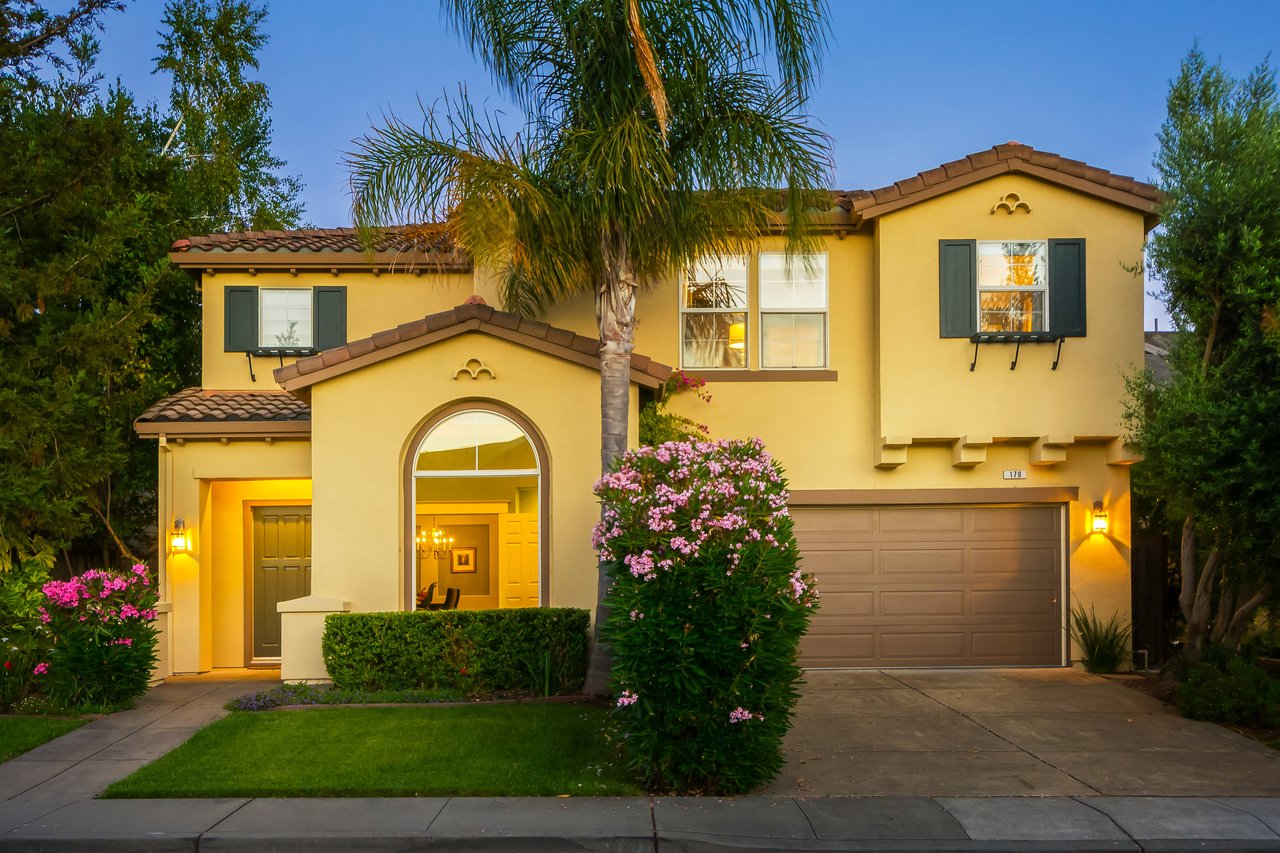 Hamilton Field, Novato (94949): The Definitive 2026 Resident & Buyer Guide
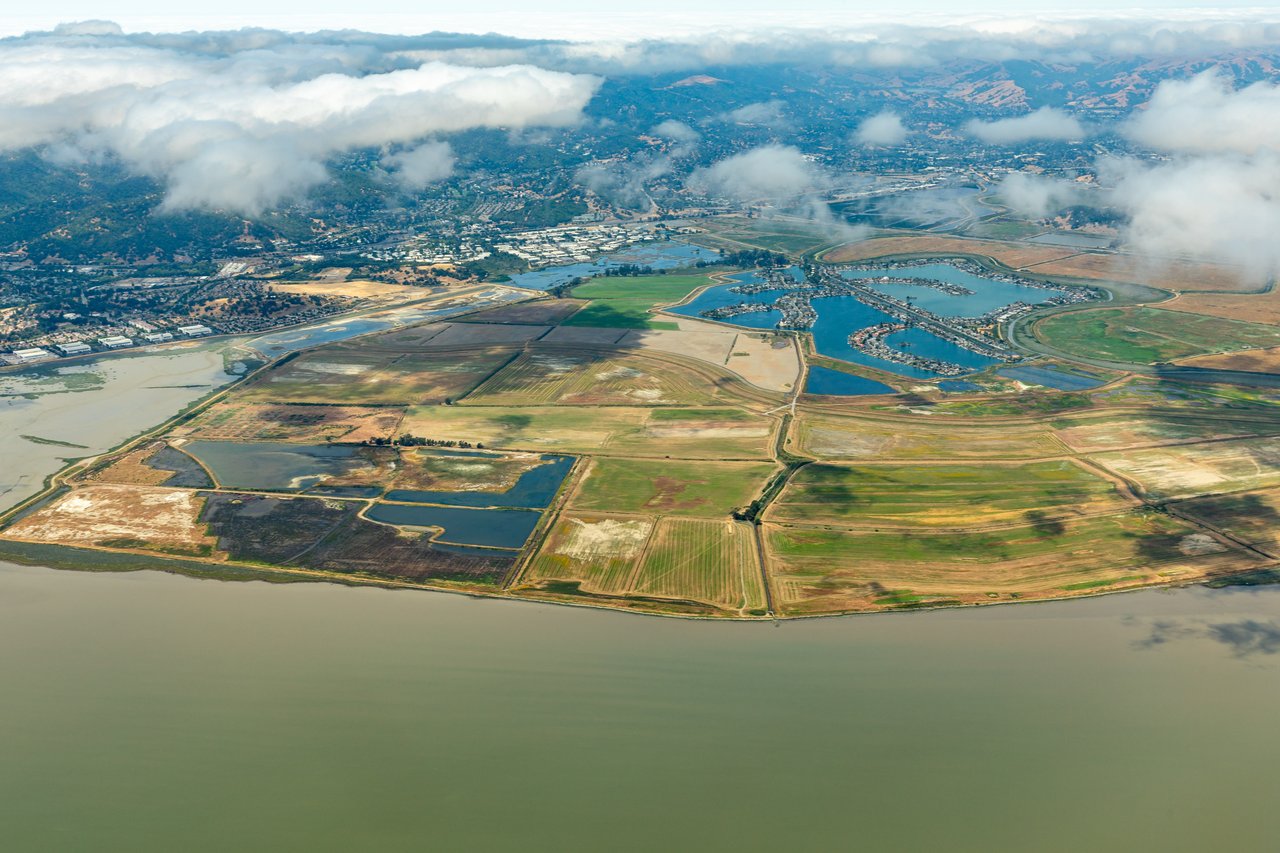 Bel Marin Keys, Novato (94949): Complete Waterfront Community Guide
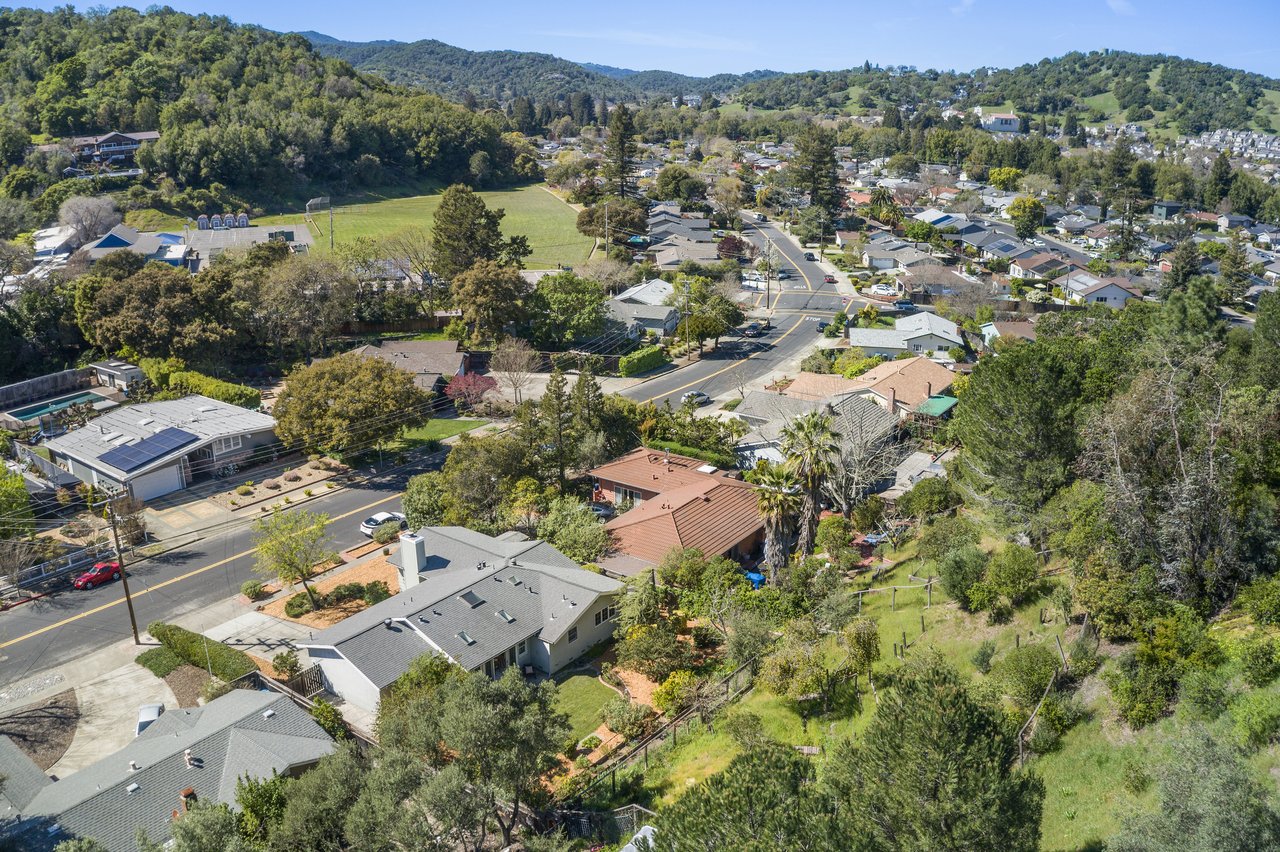 Loma Verde, Novato (94949): Complete Neighborhood Guide
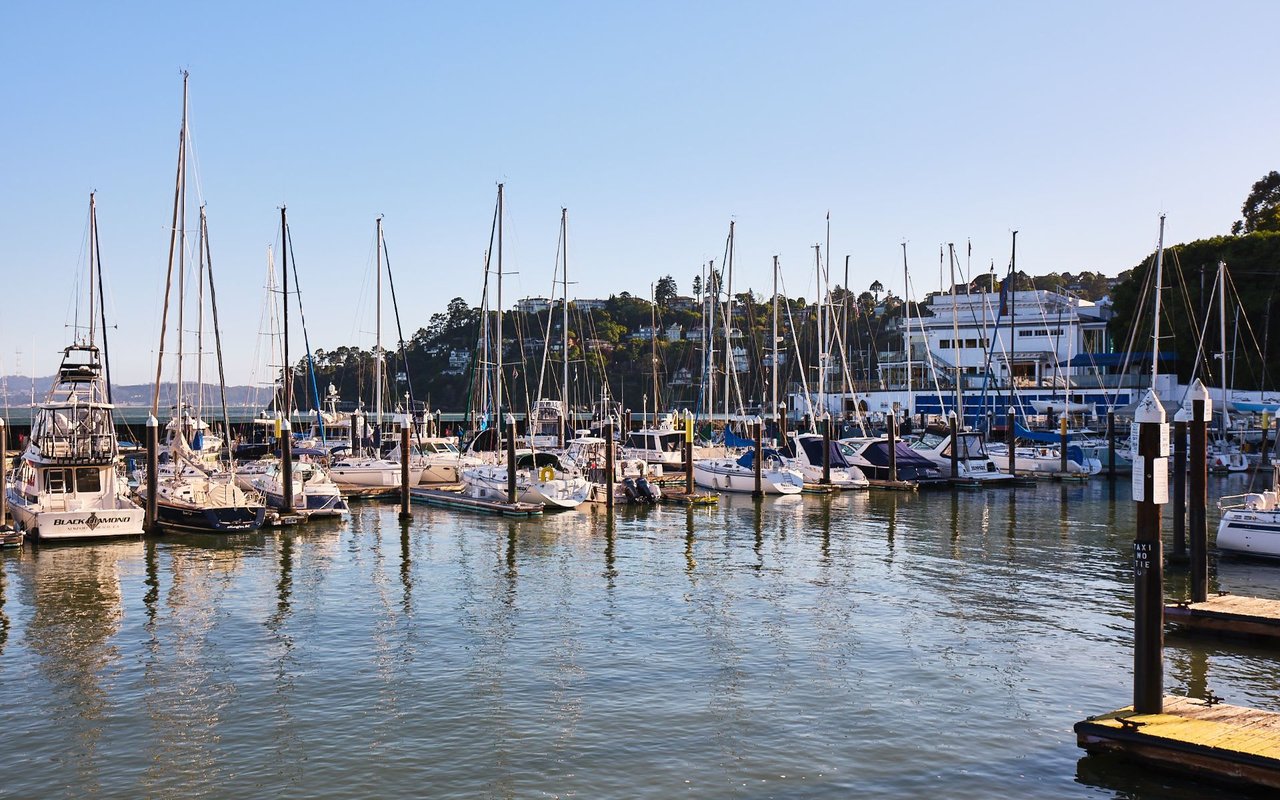 Tiburon, CA Real Estate: A Marin Luxury Broker's Complete Town Guide
 Stinson Beach, CA Real Estate: A Marin Broker's Complete Guide
 Sausalito, CA Real Estate: A Marin Broker's Complete Town Guide
 San Anselmo, CA Real Estate: A Marin Broker's Complete Town Guide
 Ross, CA Real Estate: A Marin Broker's Complete Town Guide
Mill Valley, CA Real Estate: A Marin Broker's Complete Town Guide
Ross, CA Real Estate: A Marin Broker's Complete Town Guide
Mill Valley, CA Real Estate: A Marin Broker's Complete Town Guide
 Larkspur, CA Real Estate: A Marin Broker's Complete Town Guide
 Inverness, CA Real Estate: A Marin Broker's Complete Guide
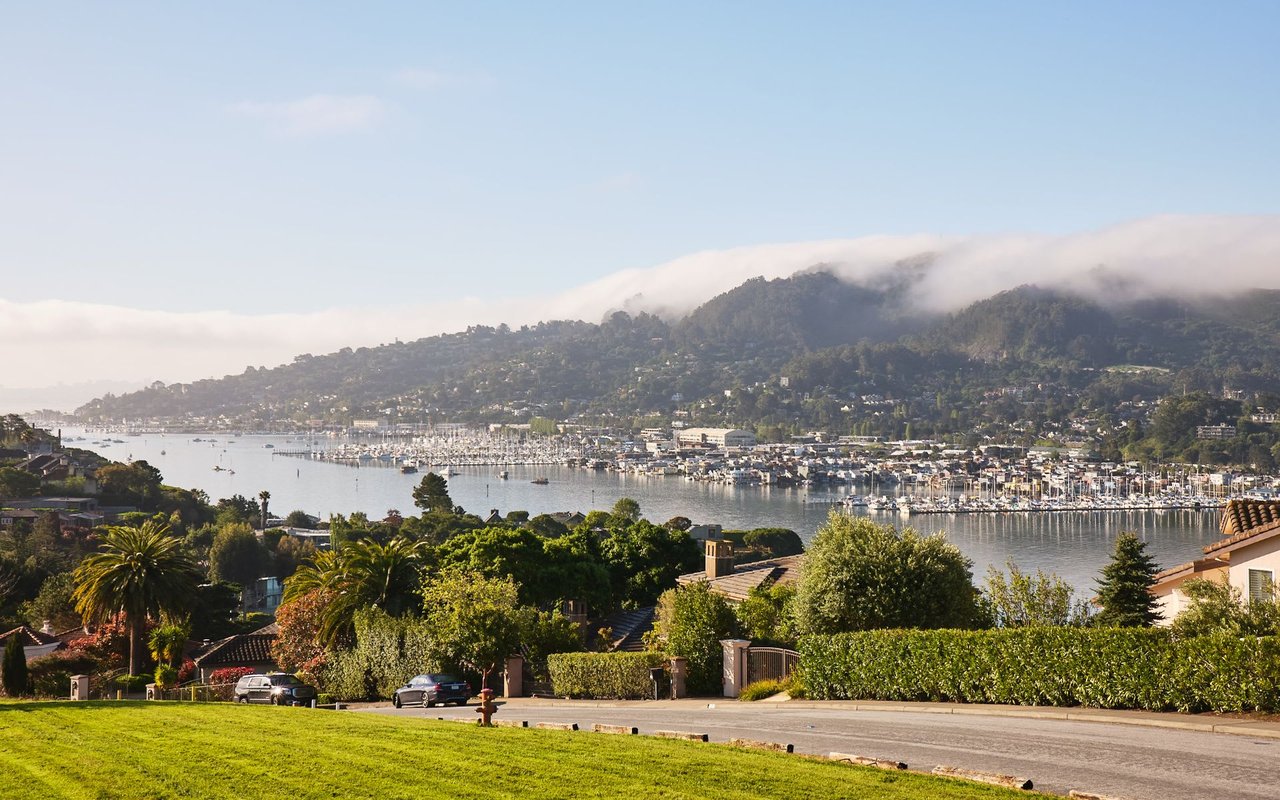 Greenbrae, CA Real Estate: A Marin Broker's Complete Guide
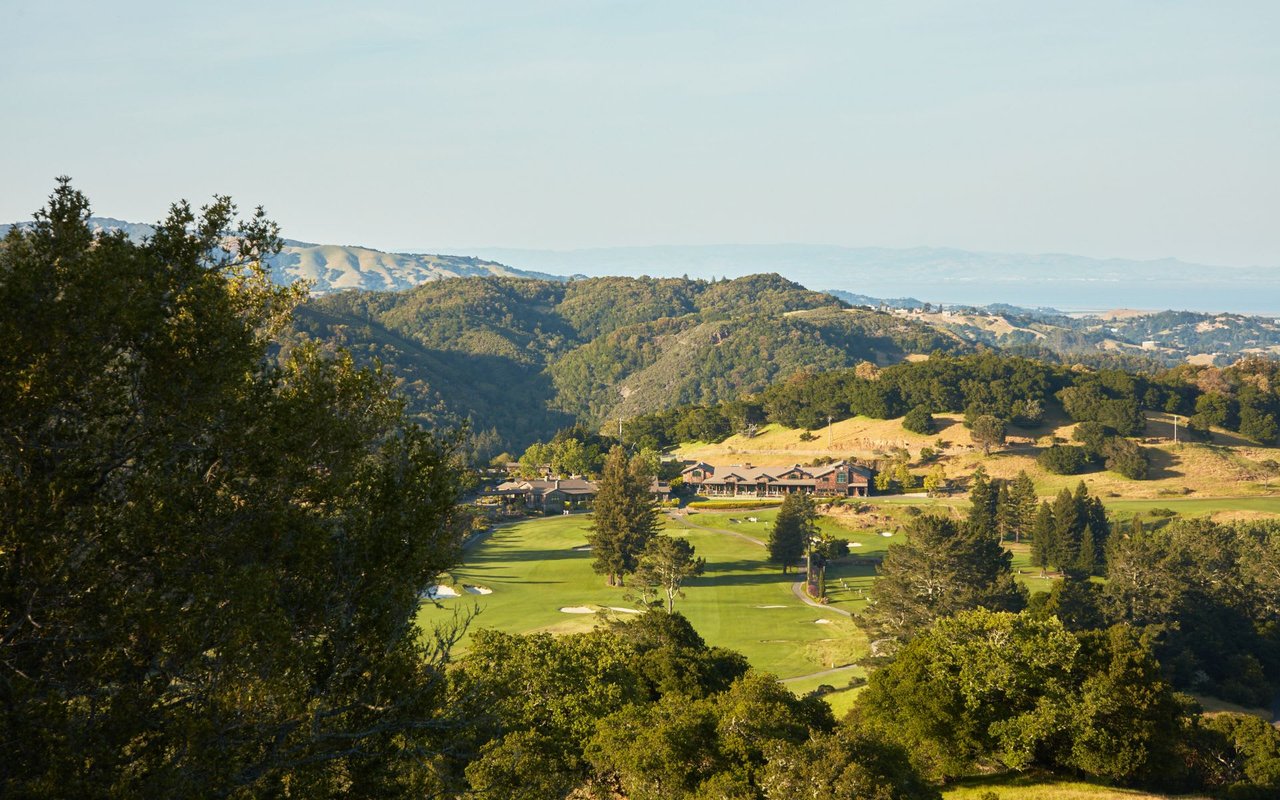 Fairfax, CA Real Estate: A Marin Broker's Complete Town Guide
 Corte Madera, CA Real Estate: A Marin Broker's Complete Town Guide
 San Rafael, CA Real Estate: A Marin Broker's Complete Town Guide
 Kentfield, CA Real Estate: A Marin Broker's Complete Guide
 Belvedere, CA Real Estate: A Marin Broker's Complete City Guide
 Nicasio, CA Real Estate: A Marin Broker's Complete Valley Guide