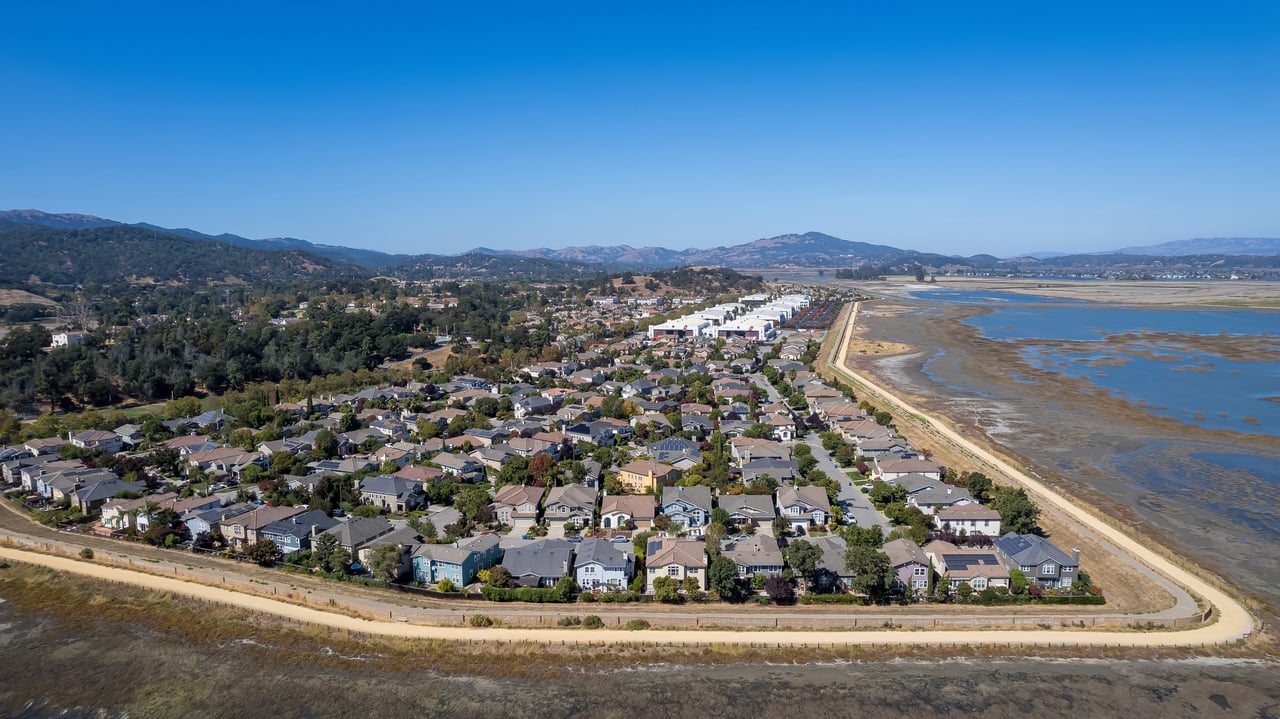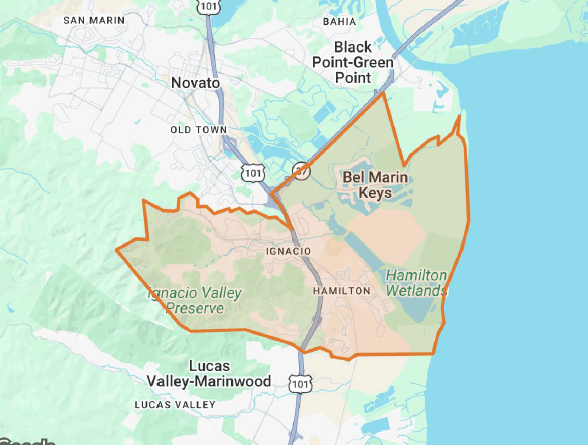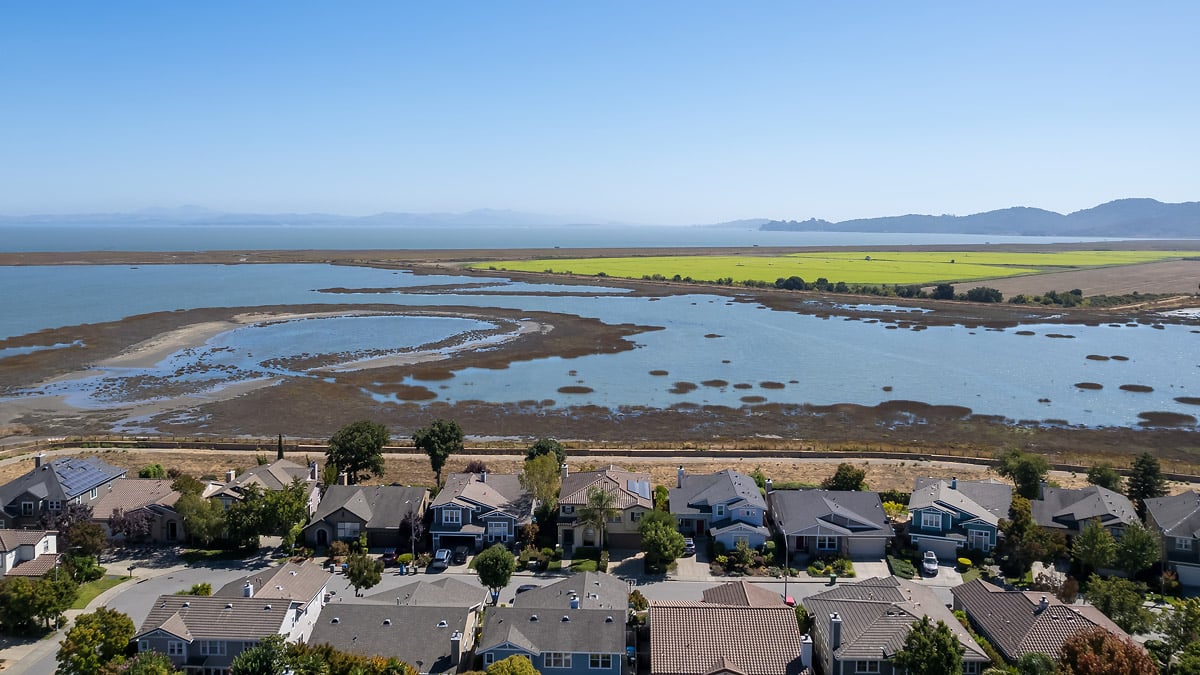
The Marin Audubon Society runs organized field trips to a lot of places. In March 2025, they brought a group to Hamilton Field — not to tour the neighborhood, but to walk the levee trail at the wetlands that backs up against your backyard fence. Point Blue Conservation Science co-led the trip. The target list included a dozen shorebird species, the White-tailed Kite, wintering Canvasback ducks, and the endangered Ridgway's Rail: a bird so secretive that most people who live a quarter-mile from its habitat have never seen one, or known it was there.
That gap — between what regional naturalists know about the Hamilton Wetlands and what most Hamilton Field residents know — is what this post is about.
What Actually Changed in 2014
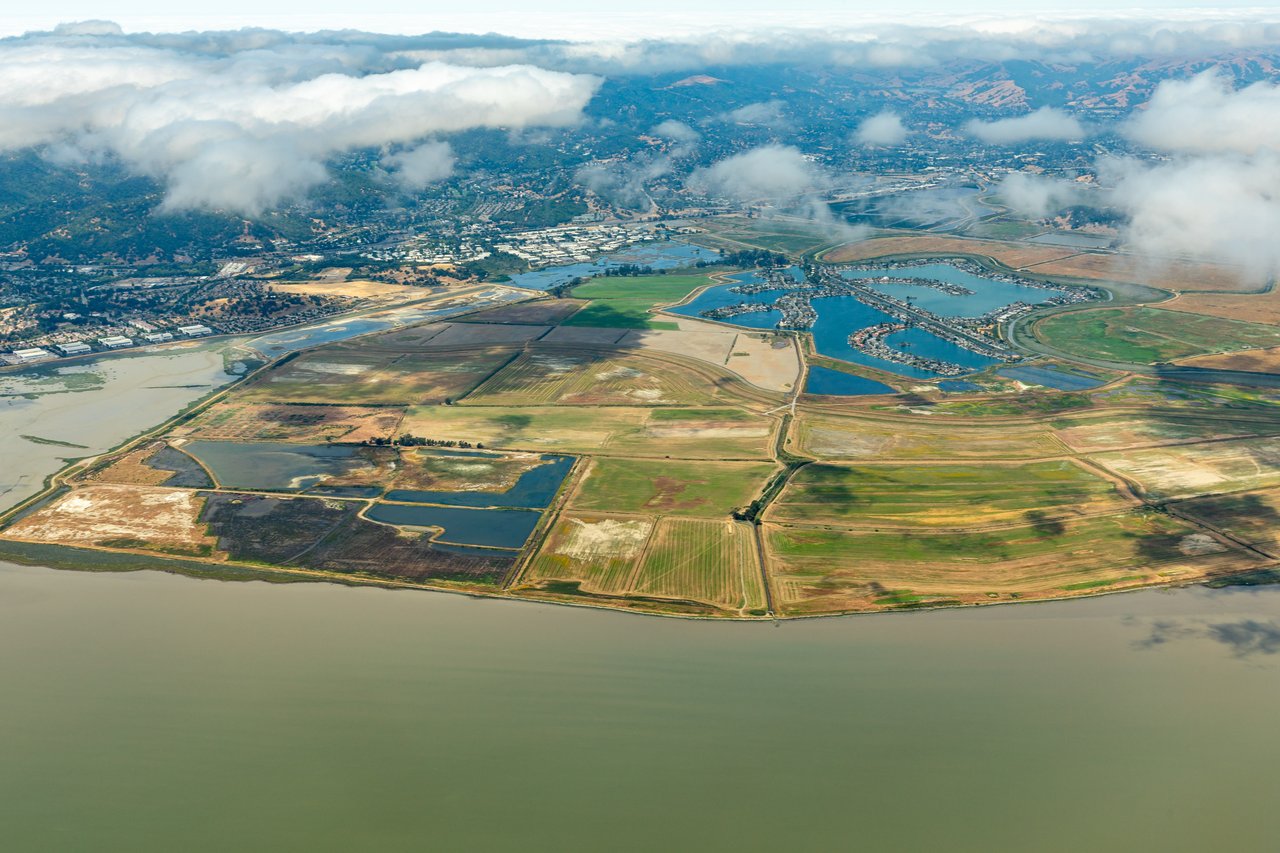
The trail along the wetlands has been there for years. What changed on April 25, 2014, was structural: engineers breached the outboard levee at the former Hamilton Army Airfield site, reconnecting roughly 2,600 acres of diked land to the tidal waters of San Pablo Bay for the first time in nearly a century. The land had been drained for agriculture around 1900, then converted to a military airfield in the late 1920s. Before any of that, it was tidal marsh.
Environmental Science Associates, which has led annual monitoring since construction, documented what happened next: the site evolved quickly. A complex channel network developed. Native tidal marsh vegetation established itself. And birds arrived — in the kinds of numbers that don't happen by accident.
This is why birding organizations started scheduling trips here. The Hamilton Wetlands are not a pleasant pond with a few ducks. They are one of the largest wetland restoration projects in California, and they are working. Point Blue Conservation Science has recorded more than 200 bird species at the Novato Baylands site. Three species that are threatened or endangered breed here: the Ridgway's Rail, the Western Snowy Plover, and the Salt Marsh Harvest Mouse. Tens of thousands of migratory birds use the site as a resting and wintering stop on the Pacific Flyway each year.
The trailhead is at the end of Hangar Avenue.
What You'll See, and When
The eBird hotspot record for Hamilton Wetlands currently lists 219 species observed at the site. That number grows. Here is how the birding breaks down by season, based on what the organizations bringing groups here actually target:
Winter (November through February) is peak shorebird season. The Wild Birds Unlimited Novato guide describes the mudflats as hosting large concentrations of birds, with channels that bring species close to the trail. What you can realistically expect: black-bellied plovers, semipalmated plovers, avocets, godwits, curlews, and the dense undulating flocks of "peeps" — least and western sandpipers — that make Hamilton one of the best shorebird sites in the North Bay. The Audubon-led March 2025 trip also targeted Black-necked Stilt and wintering Golden-crowned Sparrow.
Spring migration (March through May) brings movement. Raptors push through. The White-tailed Kite, a year-round resident of the Bay Area grasslands, is consistently present. The Point Reyes National Seashore Association notes that "thousands of plovers, peeps and small shorebirds feed here" during this period, alongside larger waders including avocets, godwits, and curlew.
Summer is quieter on shorebirds but productive for resident species and early returning migrants. The site supports multiple life stages of fish, which keeps herons and egrets active at the channels year-round.
Fall brings the first wave of returning migrants and the beginning of waterfowl season. Canvasback, cinnamon teal, and wood duck have all been documented here.
One species cuts across all seasons but rewards patience at any time of year: the Ridgway's Rail. It is most often heard before it is seen — a clucking call from deep in the pickleweed. If you hear it, stop and wait at the channel edge.
Two Trailheads, Different Experiences
Most residents enter from South Hamilton Park at the end of Hangar Avenue, which puts you at the playground and ball fields before reaching the wetlands trail. This is the access point OneTam used for their February 2025 guided walk. It is flat, stroller-accessible, and connects directly to the Bay Trail levee.
The Wild Birds Unlimited guide describes a second access point near the Hangar 6 and 7 ramp that gives you a different view: heading left (north) from that ramp puts you quickly at a channel whose banks hold birds close to the trail. Heading right opens up the mudflat views, where a spotting scope is useful. The upland area near the playground entrance is consistently described as the best spot for close looks at semipalmated and black-bellied plovers.
If you have never birded the site before, start at the Hangar 6/7 ramp. Walk north first, spend time at the channel, then double back and head south toward the playground trailhead. The full loop is roughly 2.5 miles with almost no elevation change. Bring binoculars. A spotting scope is worth it if you have one.
The Organizations That Will Take You Further In
Three organizations now run regular guided outings specifically at Hamilton Wetlands. Each one targets a different experience level and gives you access to local expertise that no trail sign provides.
Marin Audubon Society partnered with Point Blue Conservation Science for a March 2025 field trip led by David Sexton and Matt Keller. The format was a 3-hour morning walk. Registration was required and filled quickly. Watch marinaudubon.org for 2026 dates.
OneTam ran a 2.5-mile slow walk on February 24, 2025, focused on identification and life histories of the species encountered. The format is deliberately unhurried, with discussion along the route. No pets. Check onetam.org for upcoming dates.
Wild Birds Unlimited Novato has run "behind the scenes" levee tours in coordination with the restoration project staff, including a session where participants carpooled into areas not accessible from the public trail. Nature in Novato has also organized similar outings. Both are worth following for 2026 programming.
The Novato Baylands Stewards (novatobaylandsstewards.org) oversees the volunteer program at the site, running planting and invasive removal sessions twice weekly. This is the organization that gives you closest physical access to the marsh interior, and it's a legitimate way to learn the site at a level no guided walk covers.
Why This Matters If You Live Here
The Weekend Sherpa's trail write-up recommends Hamilton Wetlands to Bay Area visitors looking for a shorebird destination. It recommends starting at the Hangar 5-6 trailhead. It does not mention that the people who live closest to that trailhead are residents of Southgate, Bayside, and the Landing.
That is the position Hamilton Field sits in: adjacent to a site that regional naturalists specifically plan visits around, accessible on foot or by bike from most of the neighborhood, and consistently underused by the people who could be out there any morning before work.
The 2.5-mile levee trail is flat. The parking is free. The birds do not require a reservation.
Imagine Marin is a Marin County real estate team led by Kyle Frazier, with a tactical focus on the South Novato 94949 micro-markets including Hamilton Field. If you have questions about living in Hamilton Field or want to understand what the neighborhood looks like from a market perspective, book an appointment with the team.