Quick Answer: Per BAREIS MLS, Marin County recorded 711 closed single-family sales in Q2 2026 (April 1 – June 30), up 16.6% from Q2 2025. The median sale price was $1,865,000 (+3.0% year over year), and 76% of homes went into contract within 30 days at 105.72% of original list price. But homes that lingered 120+ days closed at just 84.24% — a spread worth roughly $385,000 on a median-priced home. Marin is not one market right now. It is two.
Key Takeaways — Q2 2026, per BAREIS MLS:
- 711 closed single-family sales, up 16.6% from 610 in Q2 2025 — the demand recovery is real, not anecdotal.
- Median sale price $1,865,000 (+3.0% YoY); average sale price $2,583,035 (+10.7% YoY). That divergence is the clearest evidence yet that Marin's luxury tier is pulling away from the middle.
- 76% of sales went into contract in 30 days or less, closing at 105.72% of original list — up 2.41 points from Q2 2025.
- The 120+ day cohort closed at 84.24% of original list. Crossing the 30-day line alone costs a median seller roughly $165,000; the full fast-to-slow gap approaches $385,000.
- Inventory sits near 1.1 months of supply — structurally a seller's market, but only for correctly priced homes.
- Town-level Sprint shares ranged from 64% in Novato to 89% in Mill Valley, where not a single Q2 sale lingered past 90 days. Year over year, town medians ran from −5.8% (Tiburon) to +32.1% (Larkspur) — six-town breakdown below.
Is the Marin Housing Market Strong Right Now?
Yes — but the strength is concentrated, not uniform. Per BAREIS MLS, Q2 2026 closed volume rose 16.6% year over year on 711 single-family sales, and months of supply sits near 1.1. Those are unambiguous seller's-market fundamentals: more buyers transacted this spring than last, against inventory that never meaningfully rebuilt.
The number that matters more than either of those, though, is the sale-to-list spread. In twenty-plus years selling Marin real estate, I have rarely seen the market punish mispricing this severely while rewarding precise pricing this generously. The county-wide weighted average of roughly 103% of original list hides a bifurcation that should drive every pricing and offer decision you make this quarter.
What Is the Sprint vs. Stale Split?
Sprint vs. Stale is the framework I use to describe Marin's two-speed market: the Sprint market is homes that go into contract within 30 days, and the Stale market is everything that lingers past that line. In Q2 2026, per BAREIS MLS, the Sprint market was 76% of all closed sales and cleared at 105.72% of original list price — up 2.41 points from Q2 2025. The Stale market's worst cohort, homes sitting 120+ days, closed at 84.24% of original list.
On a median-priced Marin home, that spread is worth roughly $385,000. Even the first step down is expensive: simply crossing the 30-day threshold costs a typical seller about $165,000 in final sale price. There is no gentle middle in this market — a listing is either generating competitive urgency in its first two weeks or it is beginning a slow negotiation against itself.
The mechanics behind the split are consistent in my own transactions: the Stale tier is rarely about the house being bad. It is usually a friction point — an insurance complication in a WUI zone, deferred maintenance that spooks first-tour buyers, or an aspirational list price left over from a comp that no longer exists.
Why Did the Average Price Rise 10.7% While the Median Rose Only 3%?
Because the top of the market is doing the pulling. Per BAREIS MLS, the Q2 2026 average sale price hit $2,583,035, up 10.7% year over year, while the median rose just 3.0% to $1,865,000. When the average sprints ahead of the median, it means high-end closings are growing in both count and price faster than the middle of the market.
This is the K-shaped pattern I have been tracking all year: equity-rich and cash-heavy buyers — less rate-sensitive by definition — are competing hardest for premium inventory, while the financed middle of the market moves at a steadier 3% appreciation clip. If you own in Marin's upper tier, your segment appreciated meaningfully faster than the headline median suggests. If you are buying in the middle, the market is competitive but not runaway.
How Do Marin's Towns Compare in Q2 2026?
County numbers set the frame; town numbers set the strategy. Here are six Marin markets from the Q2 2026 BAREIS MLS pulls (single-family, April 1 – June 30, 2026 vs. the same window in 2025; Sprint share = closed sales in contract within 30 days):
Town | Closed Sales | Median Price | Median YoY | Median $/Sq Ft | Sprint Share | Sprint Sale-to-List |
|---|---|---|---|---|---|---|
136 | $1,299,000 | −2.7% | $625.73 | 64% (87 of 136) | 102.28% | |
150 | $1,600,000 | +5.1% | $815.12 | 73% (110 of 150) | 105.25% | |
116 | $2,630,000 | +11.9% | $1,222.01 | 89% (103 of 116) | 108.82% | |
44 | $3,461,000 | −5.8% | $1,355.10 | 75% (33 of 44) | 102.91% | |
20 | $3,620,000 | +32.1% | $1,367.58 | 70% (14 of 20) | 104.30% | |
16 | $3,825,000 | +20.4% | $1,487.09 | 81% (13 of 16) | 107.34% |
Mill Valley is the most unforgiving Sprint market in the county — and it got hotter. 89% of Q2 2026 sales went into contract within 30 days at 108.82% of original list, up from 87% at 104.80% a year ago — and not one closed sale sat on the market past 90 days. The median rose 11.9% to $2,630,000 with price per square foot up 10.1% confirming it: real appreciation, not a mix shift. If Mill Valley is your target, you are competing in the Sprint market or you are not competing; see my Mill Valley guide for the sub-market detail.
Kentfield staged the sharpest one-year reversal of the six. In Q2 2025, Kentfield's Sprint tier closed at 98.76% — below original list. One year later it cleared at 107.34%, an 8.6-point swing, on the county's highest median at $3,825,000 (+20.4% YoY) and a $/sq ft jump to $1,487.09. The cliff got steeper too: zero sales in the 31–60 day tier, with the next closings landing at 81.72% of list in the 61–90 day cohort. On 16 sales the cohorts are small, but the shape is unmistakable: in Kentfield, a home either sprints at a premium or falls straight through to deep-discount territory.
San Rafael is the county in miniature — with the widest ladder. Marin's highest-volume market grew closings 15.4% year over year to 150 and lifted its Sprint premium from 103.35% to 105.25%, then stepped down through every tier to 79.40% of original list at 120+ days — a 26-point spread inside one city. The median rose 5.1% to $1,600,000 while median $/sq ft eased 2.7%, a mix signal that larger homes drove the gain. With sub-markets running from the Canal to Dominican, San Rafael rewards granular, neighborhood-level pricing more than anywhere else in Marin.
Tiburon is the town where the median lied. The headline says −5.8% to $3,461,000. The underlying market says otherwise: closings up 18.9% to 44, median $/sq ft up 3.3% to $1,355.10, Sprint share up from 62% to 75%, and the Sprint premium up 3.9 points to 102.91%. That is a strengthening luxury market whose median slipped on sales mix — and the $4,349,625 average against the $3,461,000 median, the widest average-to-median ratio of the six, shows the Tiburon trophy tier trading actively at the top of the K. Judging Tiburon by its median alone would get the direction of this market exactly wrong.
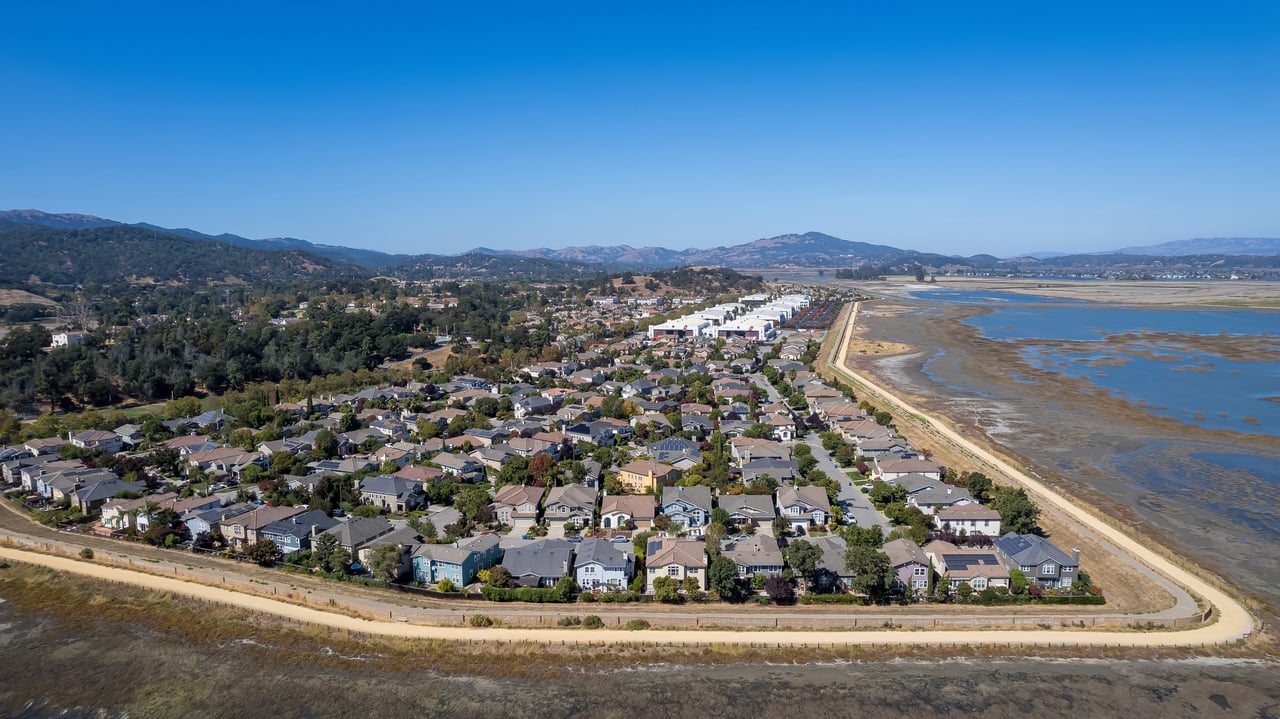
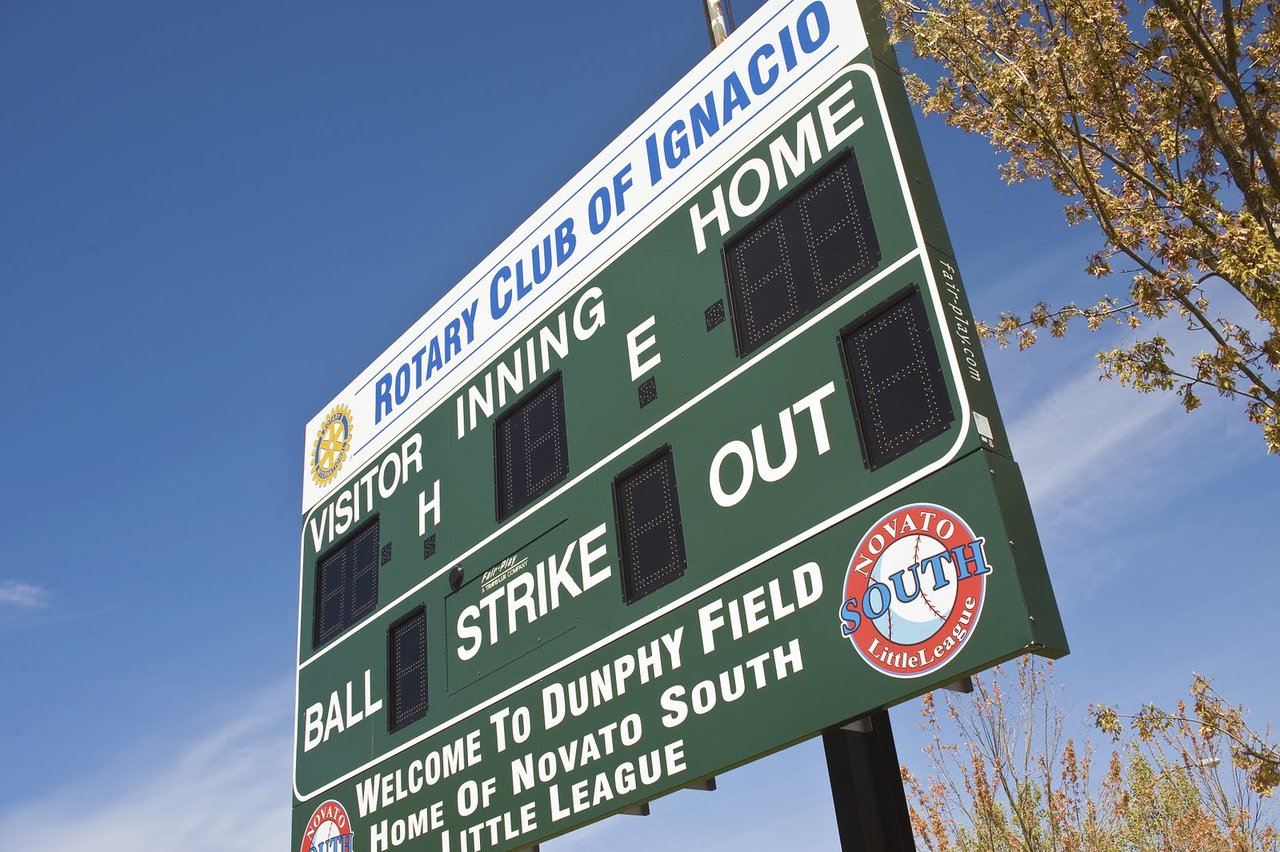
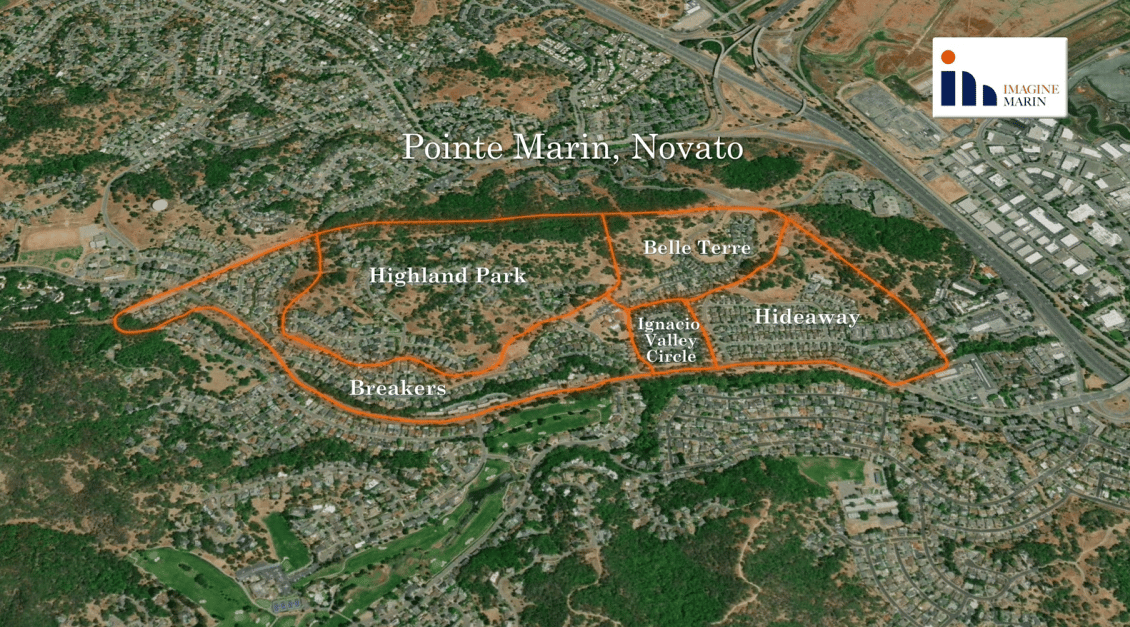
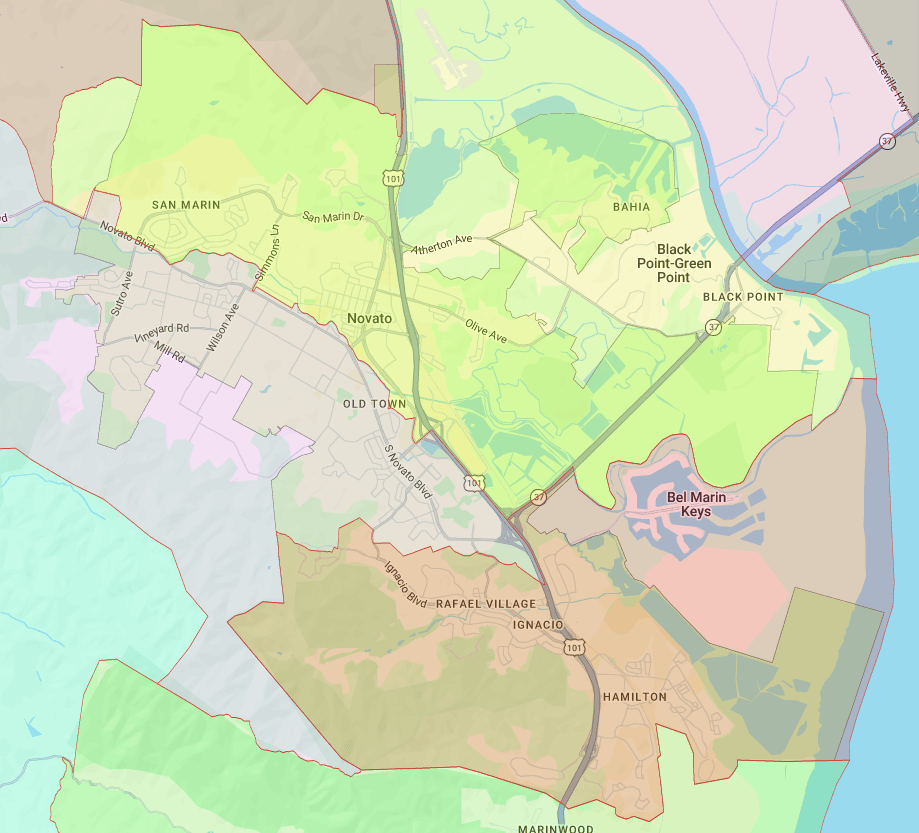
Novato is the balanced end of the spectrum — and I watch it from inside. I live in Pointe Marin, and Q2 confirmed what I see on the ground: closings rose 12.4% year over year to 136 while the median eased 2.7% to $1,299,000 and price per square foot held flat at $625.73 — a genuine volume recovery without price pressure, which is exactly what opportunity looks like for buyers. Novato ran a 64% Sprint share at a disciplined 102.28% of list, with the county's deepest 31–60 day tier: 31 sales at 95.36% of original. For buyers priced out of central Marin, Novato currently offers the county's best combination of selection and negotiability.
Larkspur posted the biggest median jump — read it carefully. Per BAREIS MLS, the median rose 32.1% to $3,620,000 on identical 20-sale quarters, a premium-mix story confirmed by the smaller 14.4% rise in $/sq ft to $1,367.58. Most telling: the 31–60 day tier closed at 101.17% of original list versus 88.00% a year ago — in Marin's strongest corridors, the Stale cliff has migrated outward past 60 days. That nuance never shows up in a Zillow estimate; the full breakdown lives on my Larkspur town guide.
The pattern across all six: four towns increased their Sprint share year over year, and the central-Marin premium markets accelerated hardest, while Novato and Larkspur cooled slightly on speed even as volume held. Every Marin town has its own version of this story, and averaging them together destroys the signal. I publish the county-wide analysis quarterly on my Marin Market Intelligence page and maintain sub-market pulls town by town.
How Should Sellers Price in This Market?
Price for the first 14 days, not the first 90. The data gives sellers exactly one high-leverage window: a home priced to generate multiple offers in its first two weeks joins the 76% Sprint cohort clearing at 105.72% of list. A home priced to "leave room to negotiate" starts a clock that costs roughly $165,000 the moment it crosses day 30 — and up to $385,000 if it drifts into the 120+ day tier.
Pre-solving friction is the other half of the job. If your home sits in a WUI zone, complete the AB-38 inspection before listing, resolve what it surfaces, and have insurance quotes ready for buyers on day one. In my experience, insurance uncertainty is the single most common reason a fundamentally good Marin listing slides from Sprint to Stale.
How Should Buyers Compete — and Where Is the Leverage?
In the Sprint market, you need to be what I call an S-Tier buyer: fully underwritten up front — not a pre-qualification, not a standard pre-approval — with insurance researched before you write, so your offer functions like cash and moves at cash speed. Fully underwritten buyers routinely win against all-cash offers in Marin because they can waive or compress the financing contingency with real credibility. In Mill Valley, where 89% of Q2 sales were gone inside 30 days at 108.82% of list, anything less than S-Tier readiness is a spectator ticket.
I break down the full S-Tier playbook in this video:
The leverage play is the Stale market. Listings past day 31 closed anywhere from 79 cents on the original dollar (San Rafael's 120+ tier) to 101 cents (Larkspur's 31–60 tier) in Q2, depending on town. Identify the friction point — usually insurance or deferred maintenance — structure your offer to absorb that specific risk, and you can negotiate a genuine discount in a county with 1.1 months of supply. Novato's 31–60 day tier, 31 sales at 95.36% of original list, is currently the county's largest pool of that opportunity. That is not a consolation strategy; for the right buyer it is the best value in Marin right now.
Frequently Asked Questions
Is Marin County a seller's market in 2026?
Yes, structurally. Per BAREIS MLS, Marin carried roughly 1.1 months of single-family supply in Q2 2026, and 76% of sales went into contract within 30 days at 105.72% of original list price. But the advantage only applies to correctly priced homes — listings that lingered past 120 days closed at 84.24% of original list.
What is the median home price in Marin County right now?
Per BAREIS MLS, the median single-family sale price in Marin County was $1,865,000 for Q2 2026 (April 1 – June 30), up 3.0% from $1,810,000 in Q2 2025. The average sale price was $2,583,035, up 10.7% year over year, reflecting outsized strength in the luxury tier.
How fast are homes selling in Marin County?
Per BAREIS MLS, 76% of Marin's Q2 2026 single-family sales went into contract within 30 days of listing. Homes in that fast-moving tier closed at 105.72% of their original asking price on average.
Why do some Marin homes sell over asking while others sell at a discount?
Marin is running a two-speed market I call Sprint vs. Stale. Homes that generate competitive urgency in their first 30 days closed Q2 2026 at 105.72% of original list, while homes sitting 120+ days closed at 84.24% — a gap near $385,000 on a median home. The dividing line is usually pricing precision and pre-solved friction (insurance, condition), not the quality of the home itself.
Which Marin towns are the most competitive right now?
Per BAREIS MLS Q2 2026 data, Mill Valley was Marin's most competitive market: 89% of single-family sales went into contract within 30 days at 108.82% of original list price — up from 104.80% a year earlier — with no closed sales lingering past 90 days. Kentfield followed at an 81% Sprint share (107.34% of list), then Tiburon at 75%, San Rafael at 73%, Larkspur at 70%, and Novato at 64%. Four of the six towns increased their Sprint share year over year.
What is the median home price in each Marin town?
Per BAREIS MLS Q2 2026 closed sales, with year-over-year change from Q2 2025: Kentfield $3,825,000 (+20.4%), Larkspur $3,620,000 (+32.1%), Tiburon $3,461,000 (−5.8%), Mill Valley $2,630,000 (+11.9%), San Rafael $1,600,000 (+5.1%), and Novato $1,299,000 (−2.7%) — making Novato the most accessible single-family entry point in Marin County at $625.73 per square foot.
Which Marin towns saw the biggest price gains over the past year?
By median sale price, per BAREIS MLS Q2 2026 vs. Q2 2025: Larkspur (+32.1%), Kentfield (+20.4%), and Mill Valley (+11.9%) led the county. But medians can mislead in small markets — Larkspur's jump is partly a premium-sales-mix effect, while Tiburon's −5.8% median masks a market that strengthened on price per square foot, sales volume, and Sprint premium. Mill Valley's gain is the cleanest: median, price per square foot, and sale-to-list premium all rose together.
What happens if my Marin home does not sell in the first 30 days?
The data shows an immediate price penalty: crossing the 30-day line cost a median Marin seller roughly $165,000 in Q2 2026, per BAREIS MLS sale-to-list figures, and the discount deepens with each additional month. The correct response is usually a decisive repricing paired with fixing the specific friction point, rather than small incremental reductions that chase the market down.
How do buyers win against all-cash offers in Marin?
By getting fully underwritten before writing the offer. Full underwriting — a complete lender file review, not just pre-approval — lets a financed buyer compress or waive the financing contingency with credibility, making the offer function like cash. I have used this approach to help financed clients beat all-cash buyers in multiple-offer situations across Marin.
Where can I find current Marin County market data?
I publish quarterly BAREIS MLS analysis — county-wide and town-by-town — on my Marin Market Intelligence page at imaginemarin.com, alongside neighborhood guides and current listings. For video analysis, my YouTube channel at youtube.com/@kylefrazier covers the same data in market-update format.
Want the Q2 numbers for your street, not just your county?
I run sub-market BAREIS pulls for every Marin neighborhood I serve. Tell me your address and your timeline, and I will show you exactly where your home sits in the Sprint vs. Stale split.
Kyle Frazier, JD | Broker Associate, Compass | (415) 350-9440 | [email protected]
Author: Kyle Frazier, JD, CRS, CLHMS — Broker Associate, Compass, DRE# 01405738. Source data: BAREIS MLS, single-family residences, Q2 2026 (April 1 – June 30, 2026) vs. Q2 2025 (April 1 – June 30, 2025), county-wide and for all six towns shown; town pulls generated July 7, 2026. Sale-to-list figures reflect percentage of original list price by days-to-contract cohort among closed sales. Cohort figures for smaller markets (Kentfield, 16 sales; Larkspur, 20 sales) reflect small samples and can swing quarter to quarter. Derived figures (months of supply, dollar-gap estimates, year-over-year percentages) are calculated from the underlying BAREIS closed-sales data. All market data is subject to revision as late-reported sales post to the MLS.